Experiment of the Bowl — History & Facts
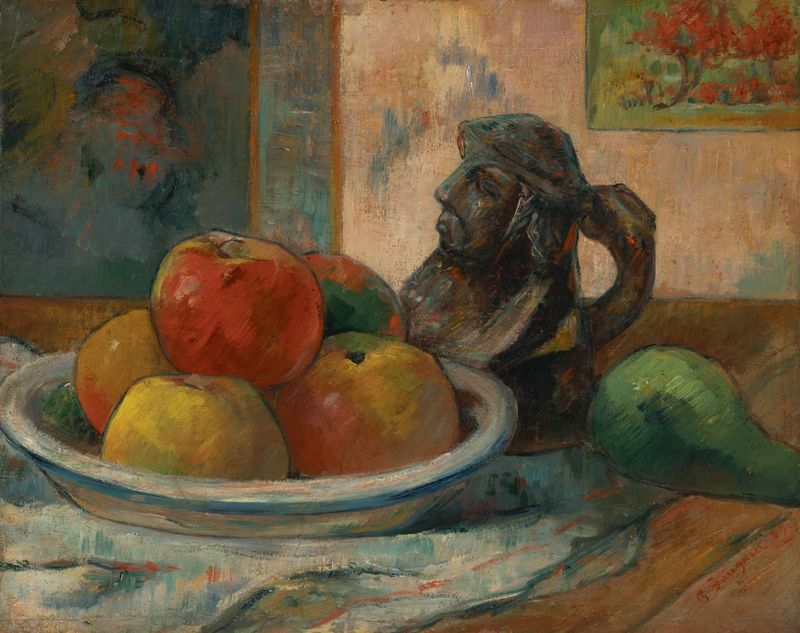
When did color learn to lie? In Experiment of the Bowl, the viewer is invited to consider the interplay of reality and illusion, as if caught in a moment where the boundaries of perception blur. Focus on the bowl at the center, its surface glistening with an almost liquid light that beckons the viewer closer. The meticulous detail of the fruit around it—mottled reds and yellows—contrasts sharply with the cool, reflective surface of the bowl itself. Notice how the artist has employed chiaroscuro, emphasizing the play of light and shadow, which heightens the sense of movement as if the objects could shift or roll off the table at any moment. Delve deeper into the subtle tensions present within the arrangement.
The juxtaposition of the rich, vibrant colors of the fruit and the stark, gleaming bowl suggests a duality—between the organic and the artificial. The bowl's reflection captures not only the fruit but also an ethereal glimpse of the surrounding space, hinting at unseen dimensions. This interplay ignites a dialogue about the nature of reality, prompting a contemplation of what is truly present versus what is merely an illusion. Pietro della Vecchia painted Experiment of the Bowl in Venice around 1640, during a time when still life gained prominence, reflecting the flourishing of the Baroque movement.
This period was marked by a shift towards realism and an exploration of form, as artists sought to elevate everyday objects to subjects of intrigue. In this work, della Vecchia deftly navigates those currents, demonstrating how art can evoke movement and thought beyond mere observation.