
Factory of Hotchkiss’ Sons, hardware manufacturers — History & Facts
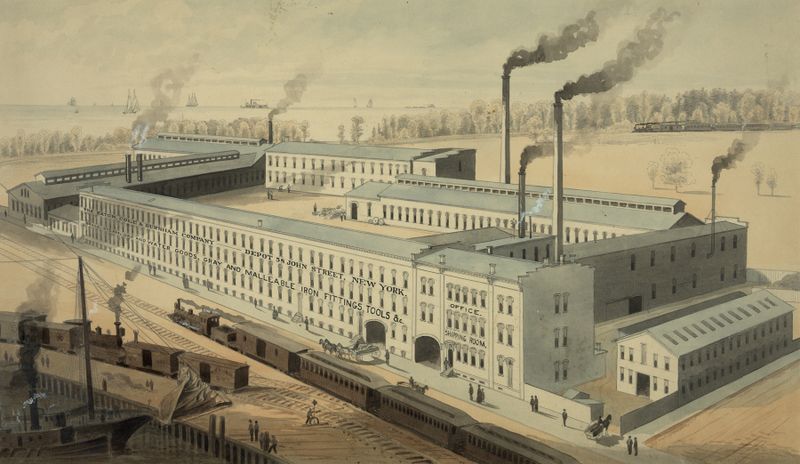
In a world where industry shapes the landscape, the delicate balance between progress and loss reverberates through time. Look to the left, where the imposing façade of the factory looms, a testament to human ambition. The grey tones dominate the canvas, evoking a sense of weight and permanence, while the slivers of light breaking through the clouds hint at hope amid the gloom. Notice the meticulous detail of the smokestacks billowing clouds that blend into the overcast sky, symbolizing both productivity and pollution—each plume a reminder of the environment sacrificed for advancement. As your gaze travels across the scene, consider the juxtaposition of the bustling workers below and the silent machines above.
The figures seem dwarfed, their labor echoing the relentless rhythm of industry, yet their postures convey a shared solitude, perhaps reflecting their personal losses in pursuit of progress. The tension between the factory's grandeur and the anonymity of the workforce speaks volumes about the sacrifices made in the name of advancement, suggesting a deeper commentary on the costs of industrialization. William Arnold Porter created this work in 1882, during a time when the Industrial Revolution was reshaping society in America. Living in a burgeoning urban landscape, he portrayed the complexity of labor and its implications.
As factories proliferated, artists began to explore themes of alienation and the human condition, making his depiction a poignant reflection of that era's challenges and triumphs.
More Artworks by William Arnold Porter
Browse all →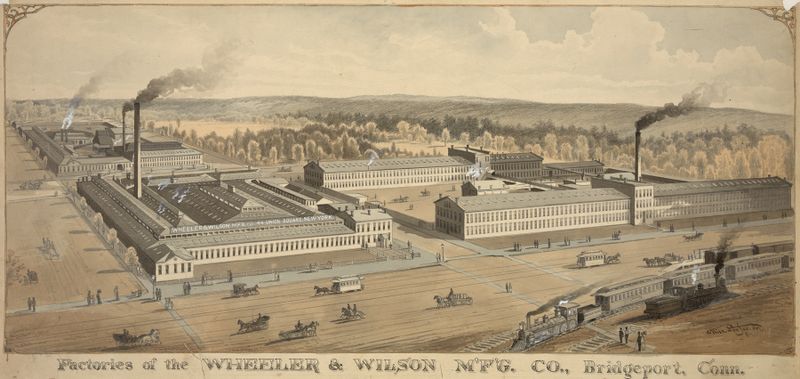
More Architecture Art
Browse all →
The statue of Liberty
Frédéric Auguste Bartholdi

View of Houses in Delft, Known as ‘The Little Street’
Johannes Vermeer

View of Houses in Delft, Known as ‘The Little Street’
Johannes Vermeer

The Cathedral in Rouen. The portal, Grey Weather
Claude Monet

The yellow house
Vincent van Gogh

The Church in Auvers-sur-Oise, View from the Chevet
Vincent van Gogh