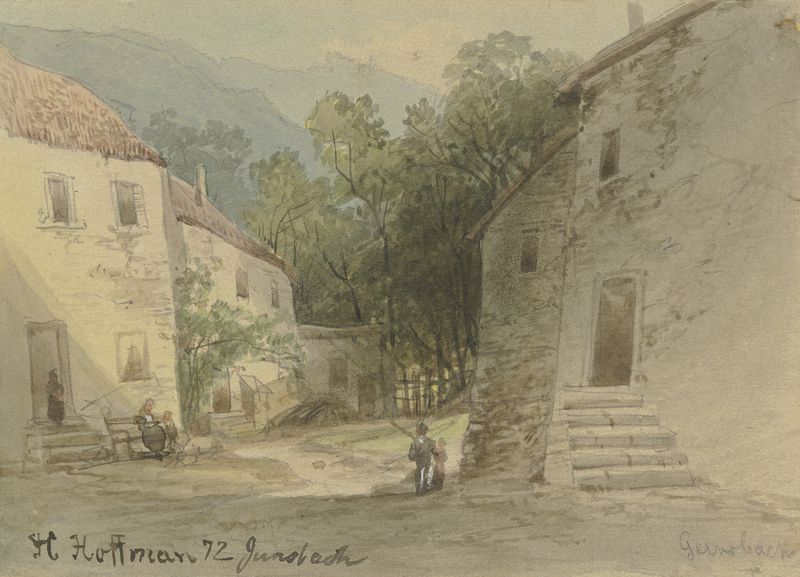
Falkenstein, Ansicht der Ruine mit der Kirche im Tal — History & Facts
Could a single brushstroke hold eternity? In Falkenstein, Ansicht der Ruine mit der Kirche im Tal, the essence of hope rises from the remnants of the past, whispering stories of resilience through its textured landscape. Look to the left at the towering ruins, silhouetted against a soft, muted sky. Notice how the artist's delicate brushwork captures the nuanced interplay of light and shadow, bringing forth the contours of ancient stone. The church nestled in the valley invites the eye, its warm hues contrasting with the cooler tones of the surrounding terrain.
Each element is meticulously placed, guiding the viewer's gaze to the harmonious coexistence of nature and mankind's endeavors. Beyond the surface, the painting embodies a deep emotional tension between decay and renewal. The dilapidated ruins, once strong and vibrant, serve as a poignant reminder of the passage of time, while the church stands resilient, a beacon of faith and hope amidst the remnants. The tranquil landscape cradles both despair and optimism, suggesting that from the ashes of the past, new life and hope can flourish. Heinrich Adolf Valentin Hoffmann painted this evocative piece in 1880 during a period of deep introspection in Europe, marked by rapid industrialization and societal change.
Living in Germany, he was influenced by the Romantic movement, which emphasized a connection to nature and an exploration of the sublime. This work reflects his desire to capture not just the physical landscape, but the profound emotional landscapes that linger within the ruins of history.