View of a village road — History & Facts
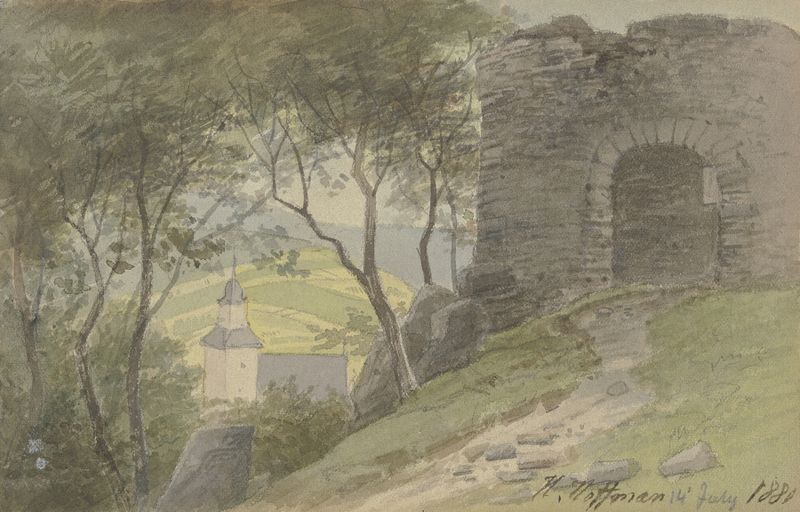
Did the painter know this moment would outlive them? In the tranquil embrace of a rural landscape, a story unfolds, one that resonates with the passage of time and the whispers of change. Look to the left at the winding dirt road, meandering through the heart of the village. Notice how the soft, earthy tones of the path contrast with the vibrant greens of the surrounding fields, creating a sense of both warmth and invitation. The sunlight filters delicately through the trees, casting dappled shadows that dance along the road, guiding the viewer's gaze deeper into the scene.
The homes, small yet sturdy, are rendered with meticulous detail, their rustic charm emblematic of a simpler existence. Yet beneath this serene façade lies a tension, a subtle foreboding of revolution. The road, smooth yet uneven, symbolizes the journey of life and the inevitable changes that lie ahead. As we observe the sturdy houses, we can't help but feel the weight of their history, holding stories of resilience amid approaching storms.
The vibrant sky reflects an impending shift, hinting at the contrasts between stability and the undulating waves of transformation. Hoffmann painted this work in 1872 during a period of profound social upheaval across Europe. He was deeply influenced by the shifts brought on by the Industrial Revolution, which was altering the landscape of daily life. This particular moment encapsulates a fleeting yet enduring glimpse into a world on the brink of change, as the artist captured the essence of rural life just before it would be irrevocably transformed.