February, 2 Degrees below Zero — History & Facts
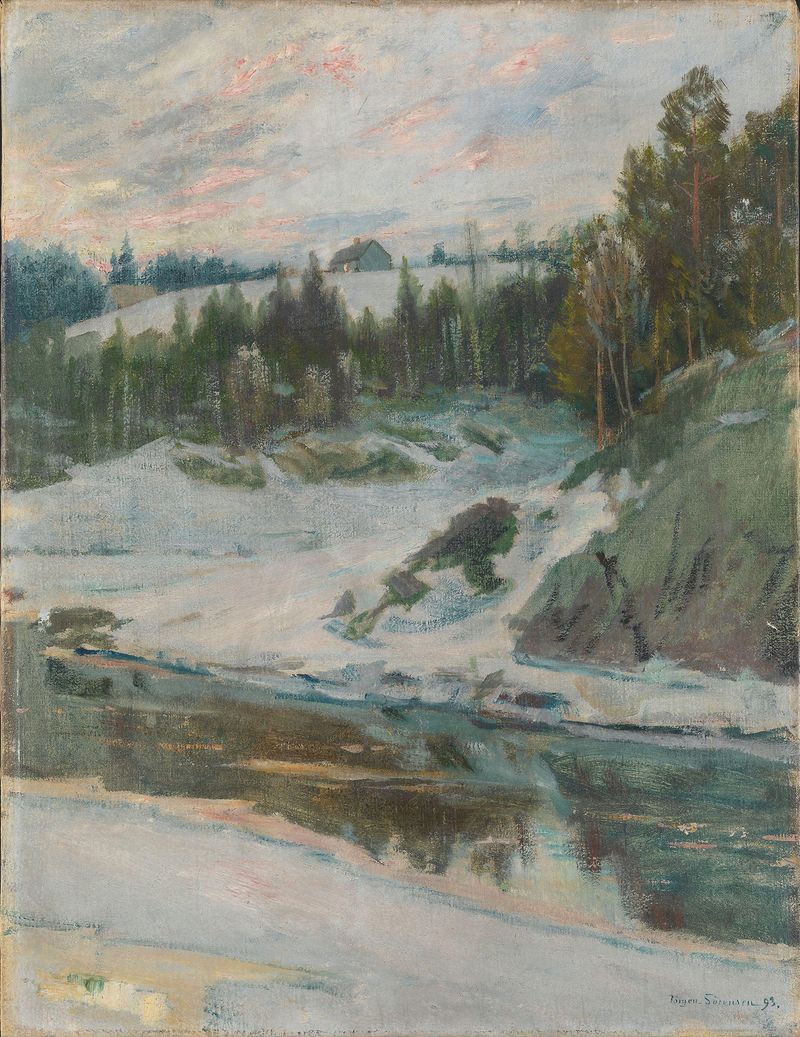
The essence of February, 2 Degrees below Zero resonates with a poignant truth, revealing the delicate dance between suffering and sublime beauty. Look closely at the stark landscape; the viewer’s eye is immediately drawn to the ethereal, icy blue hues of the sky, which spill over the white-capped hilltops. Notice how the artist expertly blends crisp whites and deep shadows, creating a shimmering texture that mimics frost on a frozen surface. The sun, a mere hint of warmth, casts a golden glow upon the otherwise harsh landscape, inviting the viewer to linger in the contrast of the scene. Upon deeper inspection, one can sense the tension the work conveys between isolation and fleeting warmth.
The skeletal trees, stripped bare, evoke a sense of abandonment, yet their silhouettes stand resilient against the winter chill. This duality of desolation and hope reflects the human experience, reminding us that beauty often emerges from hardship. Each stroke captures both the bitter cold and the quiet promise of eventual thaw, as if nature itself is a canvas for life's inevitable cycles. Jørgen Sørensen painted this evocative scene in 1887, during a pivotal moment in Scandinavian art, as artists began embracing realism intertwined with emotional depth.
At this time, Sørensen was exploring natural landscapes in his native Denmark while simultaneously grappling with personal transitions in life. His work embodies a nuanced understanding of the world around him, where beauty interweaves with the stark realities of existence.