Winterlandscape with River — History & Facts
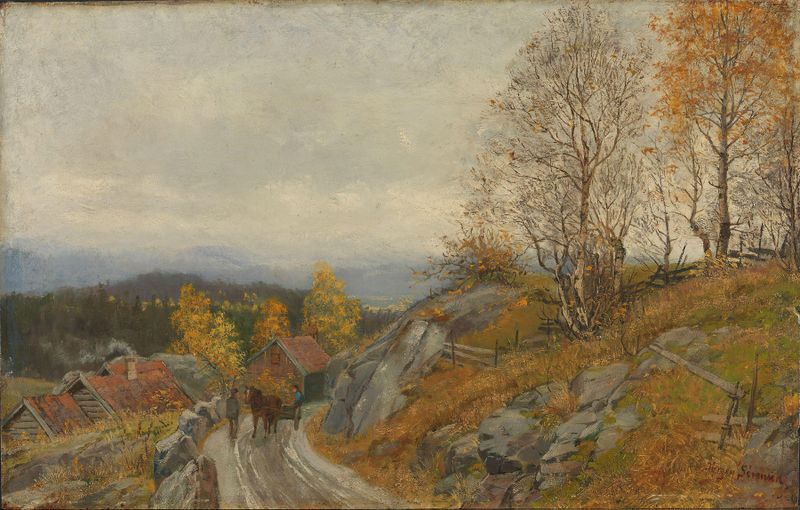
Can beauty exist without sorrow? In Winterlandscape with River, Jørgen Sørensen captures a serene winter scene, yet one cannot ignore the underlying melancholy that permeates the pristine snow and the silent river winding through the landscape. Look to the foreground, where the icy river gleams under a pale winter sun, its surface mirroring the delicate hues of blue and silver. The trees, draped in a heavy blanket of snow, stand as sentinels, their limbs outstretched against the vast, white expanse. Notice the soft gradient of the sky, transitioning from a muted lavender to a gentle gray, which enhances the stillness of the moment and invites the viewer to consider both the beauty and the coldness of winter's embrace. Delving deeper, one might observe the contrast between the stark, bare branches and the softness of the snow, echoing the tension between life and death inherent in nature's cycle.
The river, flowing amidst the chill, suggests movement and continuity, a reminder that even in the depths of winter, life persists. The stillness of the landscape is palpable, yet the gentle ripple of the water resonates with the viewer's heart, evoking feelings of nostalgia and loss. In 1893, Sørensen created this piece while living in Denmark, a time when the art world was transitioning into modernity, grappling with themes of realism and the complexities of human emotion. As artists began to push boundaries, he sought to capture the essence of nature's fleeting beauty, leaving a legacy that speaks to both the harmony and discord found within the quiet moments of life.