
Feldarbeit — History & Facts
In Feldarbeit, the essence of decay whispers through the fields, each fading hue telling a story of life’s impermanence. Look to the right at the weathered earth, where rich browns merge with the muted greens of overgrown crops. Jettel’s meticulous technique captures the soft caress of light filtering through the clouds, illuminating patches of the landscape, while shadows play in the hollows, creating a tension between vibrancy and decline. The composition draws the eye toward the horizon, where the sky holds a promise of renewal yet echoes an impending end. Amidst the lushness, subtle details reveal the emotional weight of the scene.
Notice the hints of withering plants, their vibrant colors softened by time, symbolizing a fleeting season. The contrast between the lively strokes of the foreground and the darker tones in the distance evokes a sense of nostalgia and longing, while the stillness of the scene hints at lost moments and forgotten dreams. Each aspect of the piece speaks to the universal cycle of growth and decay. Eugen Jettel painted this work in the late 19th century, a time when the Art Nouveau movement was beginning to flourish across Europe.
Living in Vienna, he was deeply influenced by the changing landscapes of his homeland and the tension between nature and urbanization. Jettel's exploration of rural themes reflected the era's growing appreciation for natural beauty and the transformations brought by modernity, weaving a narrative steeped in both hope and melancholy.
More Artworks by Eugen Jettel
Browse all →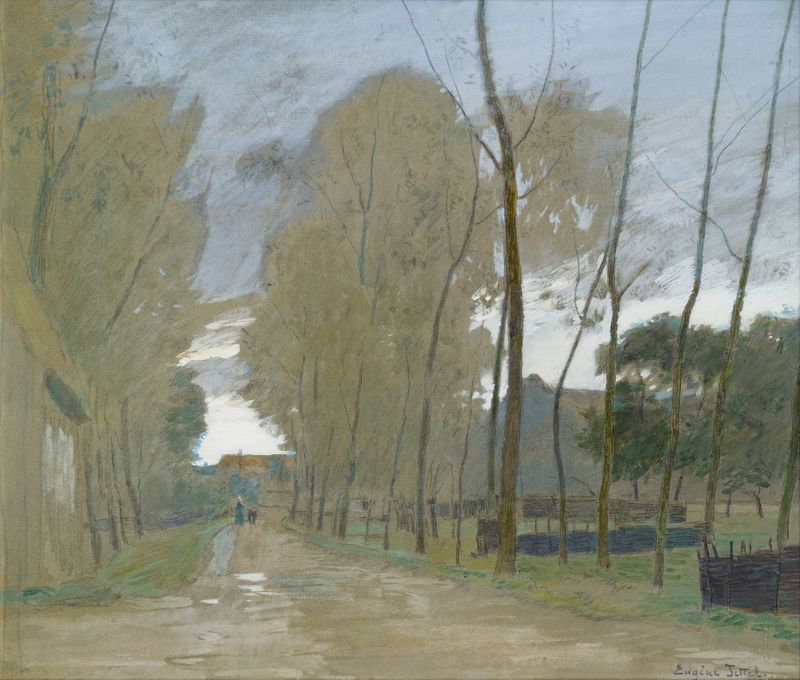
Motiv aus der Bretagne
Eugen Jettel
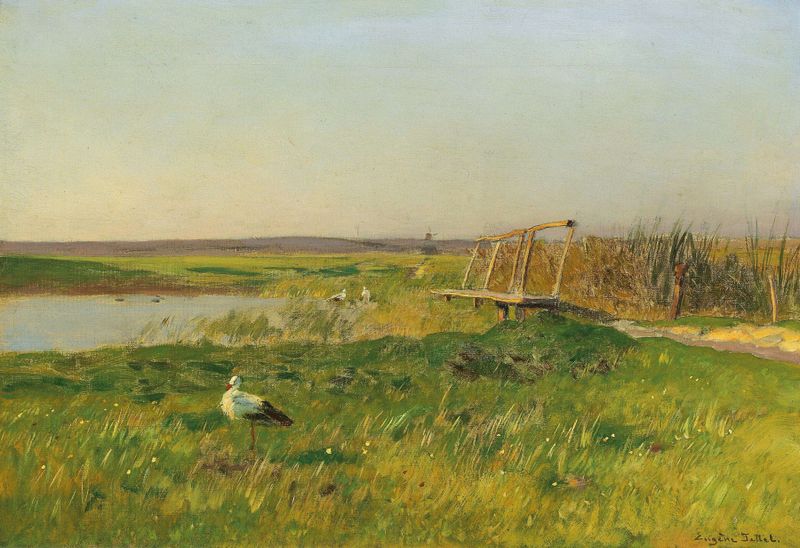
Frühlingslandschaft mit Störchen an einem Weiher
Eugen Jettel

Rinder auf Sommerwiese
Eugen Jettel
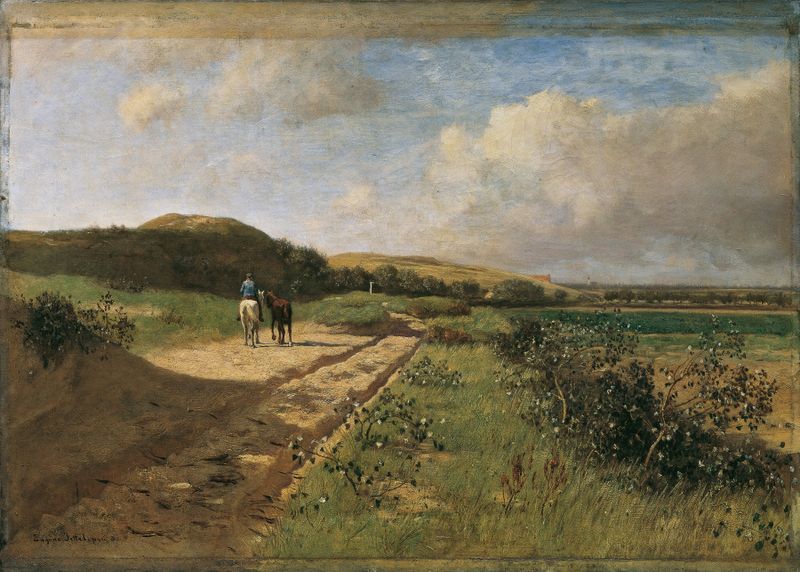
Dünen bei Katwijk
Eugen Jettel
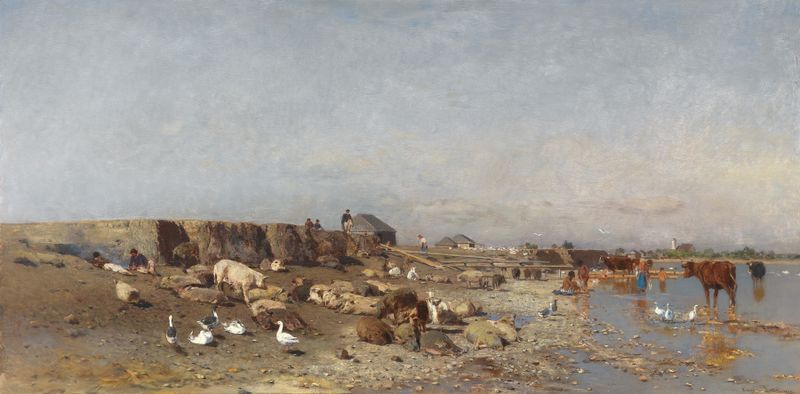
Motiv aus Szered an der Waag
Eugen Jettel
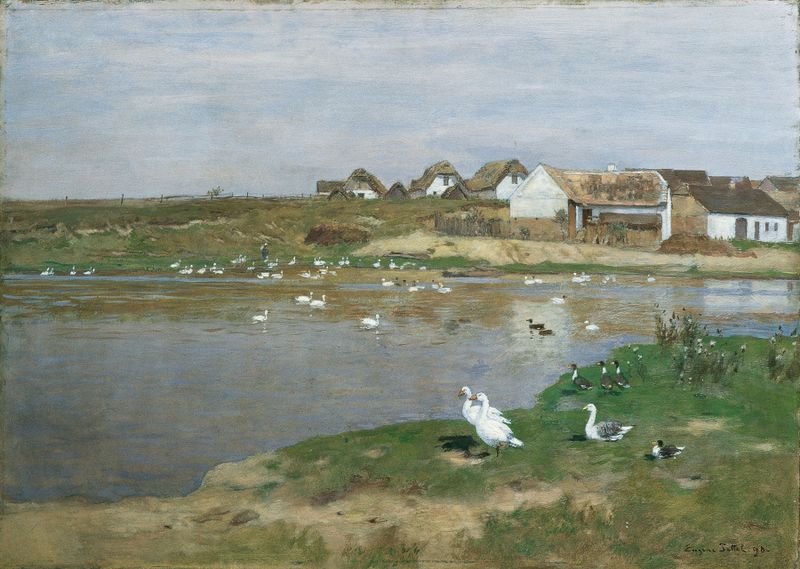
Der Gänseteich in Kotting-Neusiedl
Eugen Jettel

Flusslandschaft Mit Boot
Eugen Jettel

Flusslandschaft mit Kühen
Eugen Jettel

Dorfpartie Strohhütten aus Staatz
Eugen Jettel

Abendlandschaft
Eugen Jettel





