Feldarbeit — History & Facts
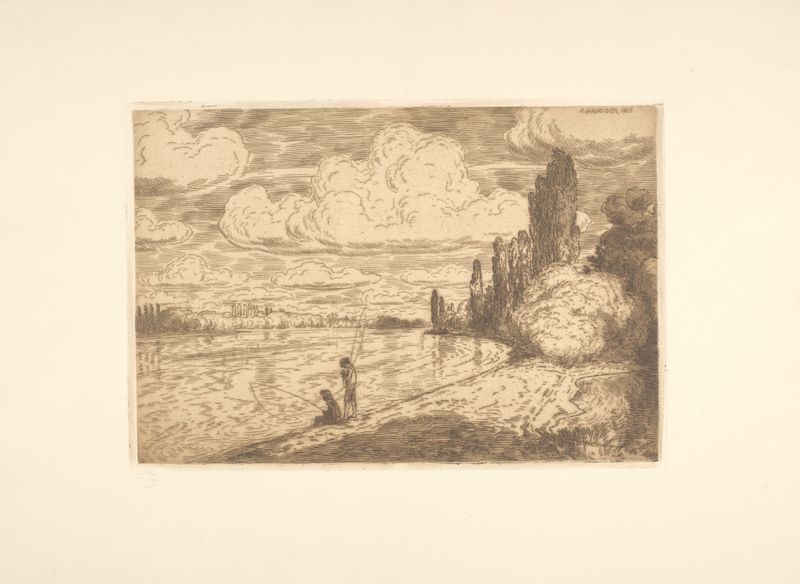
Can paint confess what words never could? In Feldarbeit, the brush captures a moment of rebirth amidst the toil of rural life, evoking the resilience and hope found in nature's cycles. Look to the center of the composition, where a farmer bends low, his body immersed in the earthy landscape. The rich browns and deep greens intertwine, creating a tapestry of life and labor. Notice how the sun filters through the foliage above, casting dappled light that dances on the worker’s back, illuminating the sweat and dedication etched upon his features.
The painter’s use of thick brushstrokes adds texture to the soil, emphasizing the intimate connection between the man and the land. Beneath the surface lies a tension between struggle and serenity. The farmer’s posture suggests exhaustion, yet his gaze is steadfast, reflecting a quiet determination that transcends hardship. In the background, the distant hills rise like guardians, symbolizing the support of nature, while the vibrant colors imply the promise of renewal harvest.
This duality signifies not just the labor itself but the intrinsic hope of growth and sustenance, which resonates deeply within the viewer. Created in 1901, this piece emerged during a time of profound change in Europe, as modernity began reshaping traditional ways of life. Haueisen, a German artist devoted to depicting rural scenes, captured the essence of agrarian existence while grappling with the rapid societal shifts around him. His choice to focus on the laborer not only reflects a commitment to realism but also serves as a subtle critique of the increasingly industrial world.