Felsgrotte auf Bornholm — History & Facts
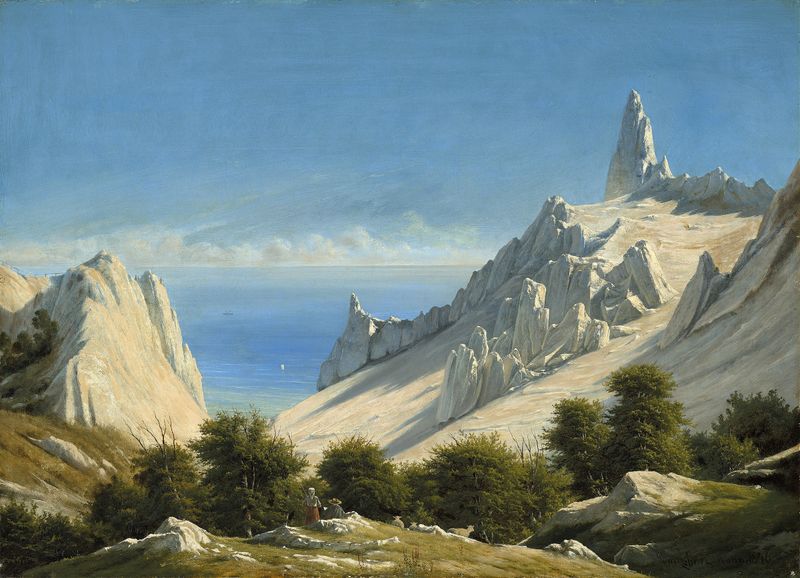
Mortality lingers in the shadows of the lifeless stone and the spectral light that dances across its surface, beckoning us to ponder our own impermanence. Focus on the cavernous mouth of the grotto, where the interplay of light and shadow creates a haunting silhouette. Observe how the artist has masterfully used earthy tones, blending deep browns and rich greens to evoke the raw presence of nature. The textured brushwork captures every undulation of the rugged rock, inviting you to touch the surface and feel its history.
Notice the subtle play of sunlight filtering into the cave, hinting at warmth in a cold, unyielding world. Within this stillness lies an exploration of contrasts. The solidity of the stone represents the steadfastness of nature, while the ephemeral light symbolizes fleeting moments of life. This tension between permanence and transience encourages a meditation on existence, urging us to confront the fragility of our own lives amidst the relentless passage of time.
Each crevice and contour speaks of stories untold, of moments etched into the very fabric of the earth. Georg Emil Libert painted Felsgrotte auf Bornholm in 1870 while residing in Denmark. During this period, he was emerging as part of the Romantic movement, which celebrated the beauty and mystery of nature. The grottos of Bornholm were a popular subject among artists, reflecting a growing fascination with the natural world and its ability to inspire both awe and introspection at a time when the Industrial Revolution was reshaping humanity’s relationship with the environment.