View of Sommerspiret,the Cliffs of Møn — History & Facts
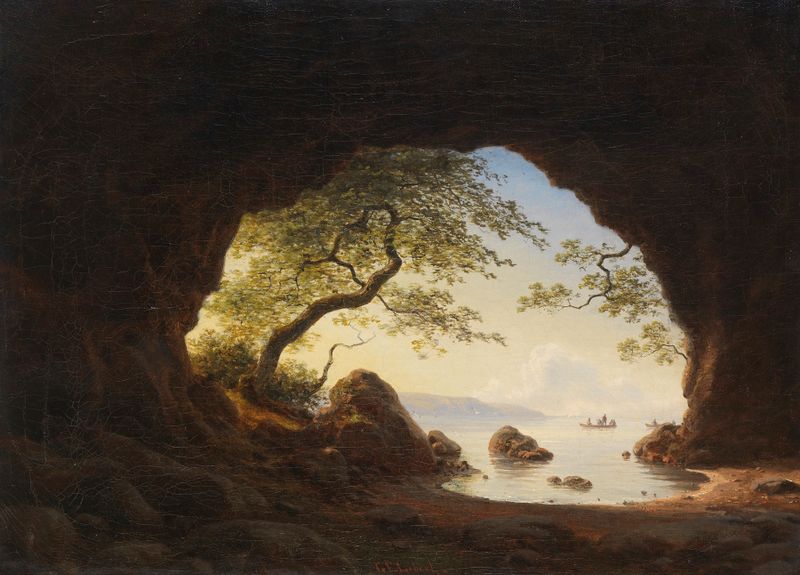
When did color learn to lie? In the vivid embrace of View of Sommerspiret, the Cliffs of Møn, the hues dance in a deceptive harmony, drawing our gaze into a world where nature's truth seems obscured. The reflection of the cliffs on the tranquil water invites contemplation, beckoning the observer to ponder the essence of reality as captured by the artist’s brush. Look to the left, at the rugged cliffs that stand majestically against the sky, their stark whites and deep blues contrasting sharply with the soft pastels of the foreground. Focus on the water’s mirror-like surface, where the cliffs are rendered in delicate strokes, a blend of greens and grays that suggest both solidity and ethereality.
Notice how the light plays across the scene, casting a golden glow that hints at a fleeting moment, suspended between day and dusk, a masterclass in color theory and composition. This landscape not only showcases the beauty of nature but also encapsulates a deeper tension between permanence and transience. The reflection in the water could symbolize the ephemeral qualities of memory or perception, suggesting that what we see can be a mere illusion. Additionally, the contrasting textures of the rough cliffs and the gentle waves elicit a dialogue between strength and fragility, mirroring the human experience itself. In 1846, Georg Emil Libert created this evocative piece while residing in Denmark, during a time marked by a growing appreciation for Romanticism in art.
The mid-19th century was a period of exploration and introspection, both in nature and the self, and Libert’s work reflects this spirit. He sought to capture the sublime beauty of his surroundings, aligning with his contemporaries who were beginning to embrace the emotional resonance of the natural landscape.