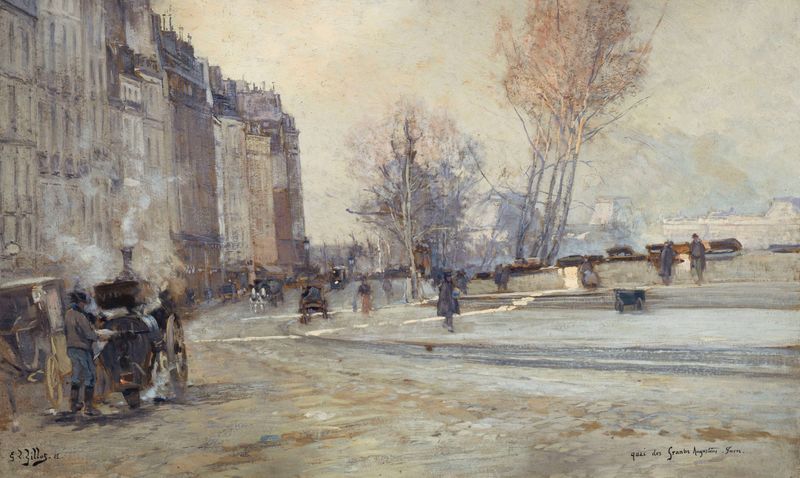
Figures resting in the mountains — History & Facts
Could beauty survive in a century of chaos? In Figures resting in the mountains, a serene moment unfolds against a backdrop of rugged peaks and gentle swells, a vivid juxtaposition of tranquility and the relentless march of time. Look to the left, where soft greens and muted browns cradle the figures, drawing your gaze into their restful repose. The brushstrokes are fluid, suggesting movement even in stillness, as if the wind dances through the landscape. Notice how the light filters through the trees, casting dappled shadows that play across their forms, emphasizing the warmth of their skin against the coolness of the surrounding wilderness.
The composition invites you to linger, to breathe in the harmony of nature entwined with human presence. Amid this calm, tiny details whisper deeper truths. The figures, though relaxed, seem suspended in a moment that hints at the fragility of peace. Their faces are imbued with a sense of contemplation, possibly pondering the conflicts beyond this idyllic scene.
The mountain backdrop looms, both protective and imposing, embodying the duality of solace and isolation within the natural world. It speaks to the tension between human vulnerability and the grandeur of nature that can both comfort and overwhelm. During the period when this work was created, Clairin was influenced by the burgeoning Impressionist movement, reflecting a shift in artistic exploration. Working in France amidst a backdrop of rapid social and artistic change, he sought to capture fleeting moments of beauty, perhaps as a counterpoint to the tumult of his era.
The untouched majesty of the mountains serves as a stark reminder that even amid chaos, there are still places of respite to be found.