Finsbury Square — History & Facts
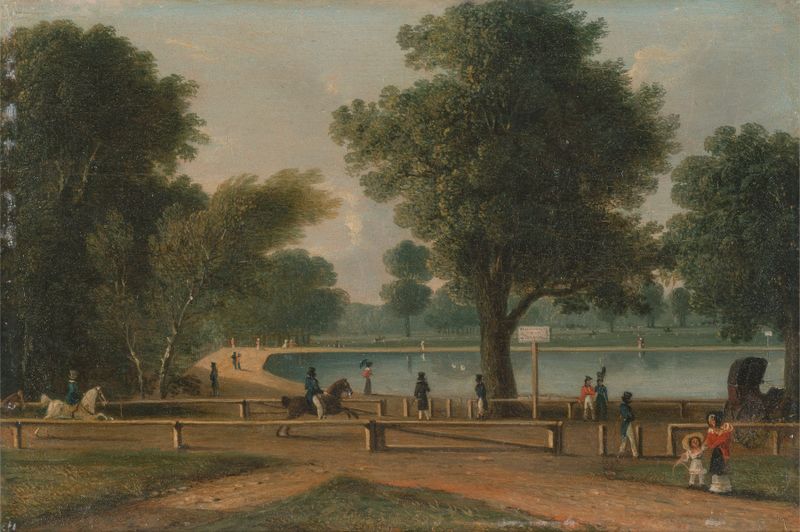
In the wake of a sunlit morning, one can almost feel the thrill of rebirth that resonates from the canvas. A vibrant scene unfolds that encapsulates the spirit of renewal, echoing the whispers of nature awakening after a long slumber. Look to the left at the verdant trees, their leaves dancing in the gentle breeze, a testament to life’s resilience. Notice how the light filters through the branches, casting playful shadows on the cobblestones below, inviting the viewer to step into this serene moment.
The palette is rich with greens and soft blues, breathing life into the quietude of Finsbury Square while the delicate brushwork suggests movement and vitality, as if the very air is charged with possibility. The emotional tension lies in the juxtaposition of human presence against nature's tranquility — a group of figures, engaged in leisurely pursuits, seem blissfully unaware of their surroundings’ beauty. This vibrant camaraderie serves as a contrast to the stillness of the landscape, revealing a deeper narrative about the coexistence of humanity and nature. Each figure, though distinct, contributes to the overall harmony, underscoring the idea that life, like the changing seasons, is a cycle of beginnings and endings. In 1814, when this piece was created, George Sidney Shepherd was establishing himself as a painter of landscapes, capturing the essence of English life against the backdrop of a transforming urban landscape.
The early 19th century was marked by industrial growth and societal change in England, yet this work reflects a yearning for the pastoral and the natural, embodying a sense of nostalgia amidst the encroaching modern world.