
The Times and Evening Mail Office — History & Facts
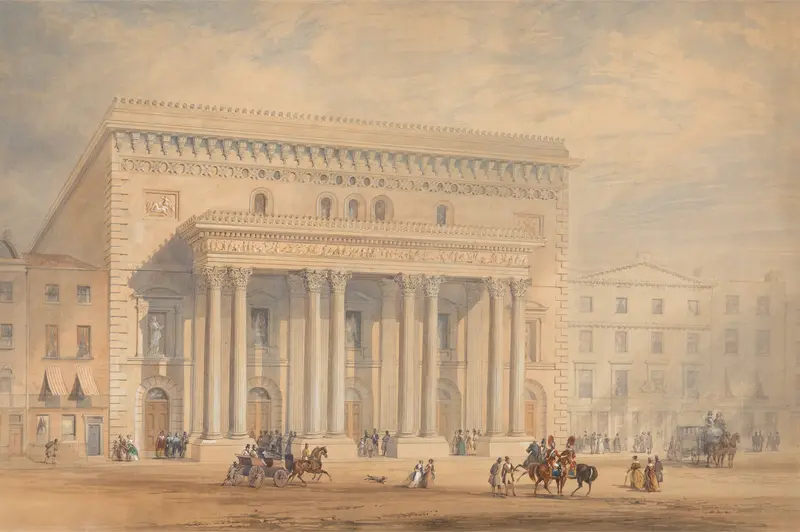
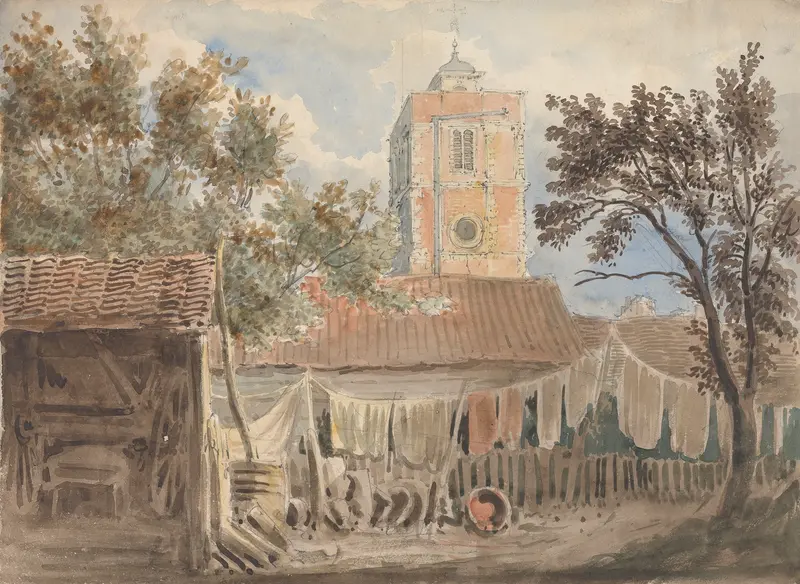
Where does light end, and longing begin? A single moment captured in the mundane transforms the ordinary into something awe-inspiring. Look to the left at the doorway, where the warm glow of gaslight spills onto the cobblestones, creating a stark contrast with the cool shadows of the evening. The figures huddled in conversation draw you in, their faces illuminated by flickering flames, each expression a study in anticipation and purpose. Notice how the architecture frames these individuals, leading the eye upward toward the tall windows, hinting at the bustling world beyond, yet inviting a sense of intimacy that feels almost voyeuristic. In this scene, the juxtaposition between light and shadow speaks volumes.
The soft glow represents hope and possibility, while the encroaching darkness embodies the weight of the unknown. Look closely at the small details—the newspaper folded under one man's arm, a subtle reminder of the times they inhabit, teetering between knowledge and ignorance. Every brushstroke reveals the artist's intent to evoke not just a scene, but the deeper currents of emotion that run beneath the surface of daily life. George Sidney Shepherd created this piece in 1811, during a period marked by rapid change in London.
The city was burgeoning with new ideas and industrial progress, yet Shepherd's focus on everyday life encapsulated the tensions of the time. Far removed from grand historical narratives, he expertly captured a slice of urban existence, reflecting both personal and societal aspirations at a moment of transition in art and society.
More Artworks by George Sidney Shepherd

More Genre Scene Art

Banquet of the Officers of the St George Civic Guard
Frans Hals

Rembrandt and Saskia in the Scene of the Prodigal Son
Rembrandt van Rijn

Bal du moulin de la Galette
Pierre-Auguste Renoir

Quadrille at the Moulin Rouge
Henri de Toulouse-Lautrec

A Burial at Ornans
Gustave Courbet

When Will You Marry?
Paul Gauguin