
First Snow — History & Facts
What if beauty was never meant to be finished? The enigma of nature's artistry resides in its impermanence, especially when it confronts the stark reality of violence. Look to the center of the canvas, where a soft blanket of snow envelops an uneven landscape, transforming chaos into tranquility. The crystalline brilliance contrasts sharply against the dark, jagged forms of branches, creating a visual dialogue between serenity and tension. Notice the muted palette—whites, grays, and deep browns—that evokes both the coldness of winter and the warmth of memory.
The brushstrokes convey movement, as if the landscape is caught in the throes of a fleeting moment, burdened yet beautiful. Beneath this serene surface lies an undercurrent of conflict. The delicate flakes, while pristine, symbolize the aftermath of a harsh winter that has stripped life away, leaving behind a haunting solitude. The interplay of light and shadow suggests the ever-present danger of nature's wrath, hinting at a violent past that coexists with the beauty of the now.
This duality invites contemplation: can we appreciate beauty without acknowledging the struggle it endured to exist? William Franklin Jackson created this evocative work during a time marked by artistic exploration in the late 19th century. Emerging from the American Impressionist movement, he sought to capture the essence of fleeting moments in nature. In this period, artists were increasingly drawn to local landscapes, reflecting both personal and collective experiences, echoing the intricate relationship between beauty, violence, and the human condition.
More Artworks by William Franklin Jackson
Browse all →
Entrance to the Golden Gate, San Francisco
William Franklin Jackson

Sacramento River
William Franklin Jackson
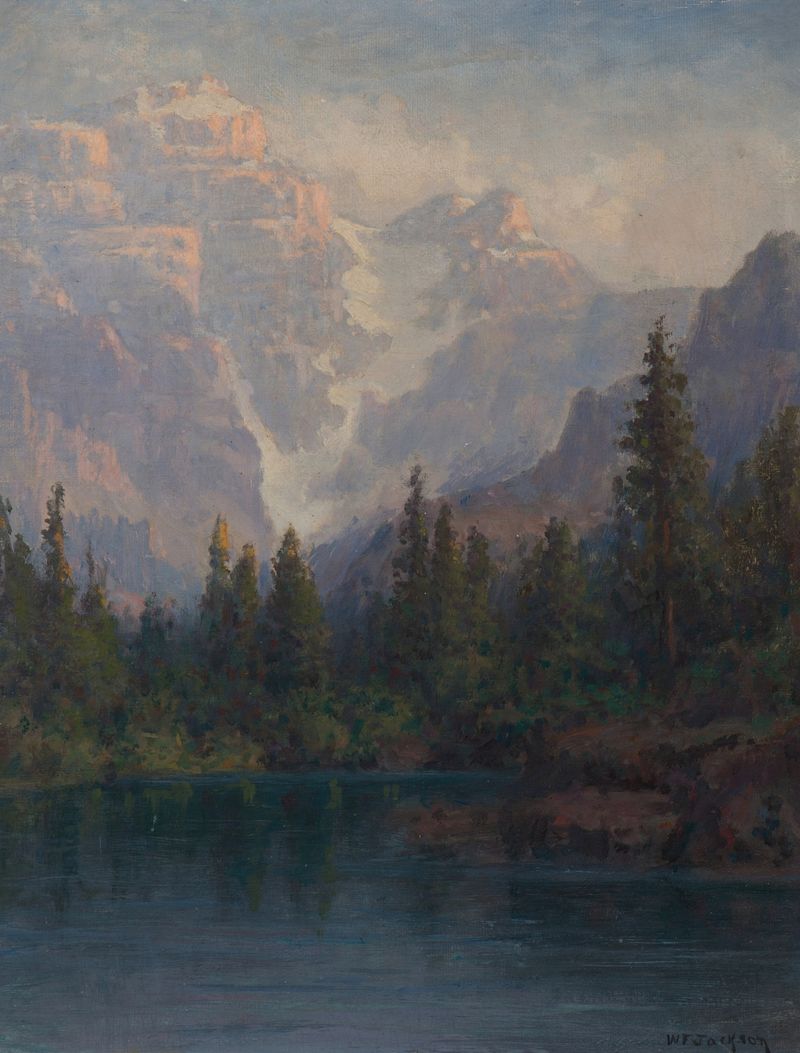
Lake Louise
William Franklin Jackson

Coastal View with Poppies and Lupine
William Franklin Jackson
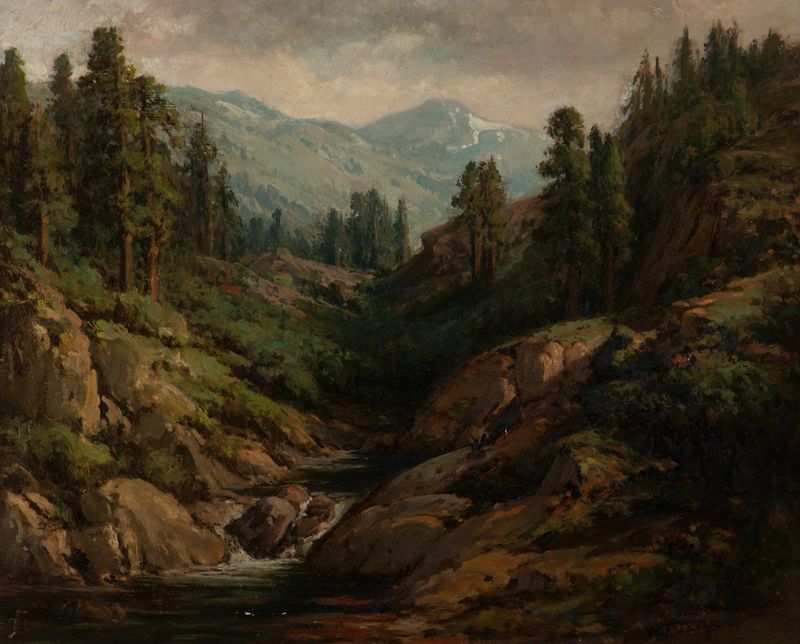
Soda Springs
William Franklin Jackson

Below Sacramento
William Franklin Jackson

Donner Lake
William Franklin Jackson





