
Lake Louise — History & Facts
In its stillness, it reflects the ephemeral nature of beauty and the fragility of existence. Look to the shimmering waters at the center, where blues and greens blend seamlessly, capturing a moment frozen in time. The surrounding mountains rise majestically, their jagged peaks kissed by sunlight, while soft clouds dance gently overhead. Notice how the delicate brushstrokes create depth, drawing the eye into the serene scene, inviting contemplation of both the landscape’s grandeur and its inherent vulnerability. Hidden within this tranquil view are themes of transience and connection.
The interplay of light on water evokes a fleeting moment, a reminder that nature’s splendor is both awe-inspiring and impermanent. The solitary trees lining the shore stand as silent witnesses to the passing seconds, each one a metaphor for resilience in the face of change. This balance of stillness and fragility encapsulates a universal emotion—the yearning to hold onto what is inevitably lost. William Franklin Jackson created this work during an era when the American West was experiencing a surge of interest among artists and explorers.
He painted Lake Louise at an unspecified date, likely during his travels in the late 19th to early 20th century, as the movement towards capturing natural landscapes gained momentum. It was a time marked by a growing appreciation for the beauty of the wilderness, influencing not just Jackson but an entire generation of artists seeking to convey nature's essence.
More Artworks by William Franklin Jackson
Browse all →
Entrance to the Golden Gate, San Francisco
William Franklin Jackson
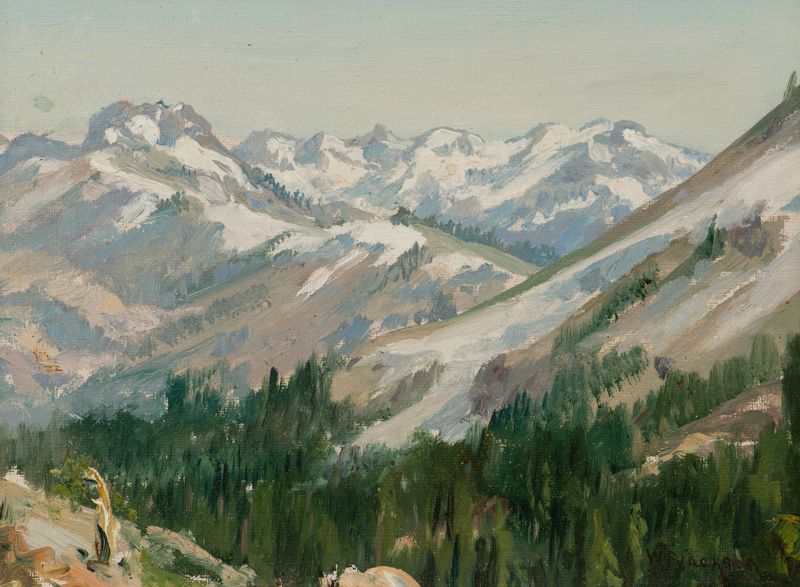
First Snow
William Franklin Jackson

Sacramento River
William Franklin Jackson

Coastal View with Poppies and Lupine
William Franklin Jackson
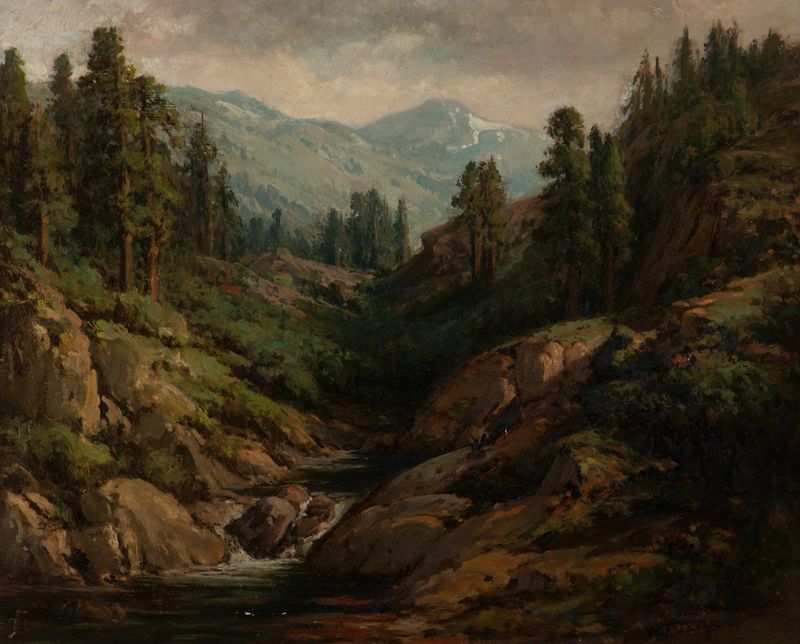
Soda Springs
William Franklin Jackson

Below Sacramento
William Franklin Jackson

Donner Lake
William Franklin Jackson





