First View of Com. Perry’s Victory — History & Facts
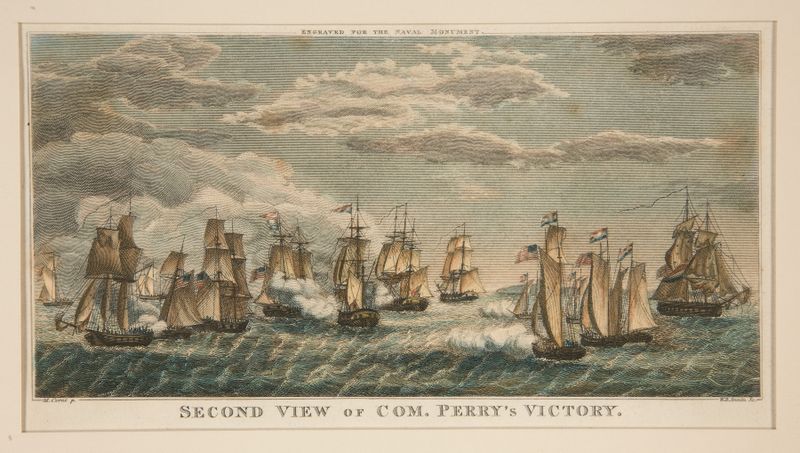
Is this a mirror — or a memory? The shimmering surface of the water reflects a moment suspended in time, evoking both triumph and the weight of loss. Focus on the central horizon where ships, bold and proud, cut through the shimmering waves. Their sails capture the sunlight, creating a stark contrast against the backdrop of a tranquil sky. Notice how the artist employs a palette of deep blues and greens, infusing the scene with a sense of both serenity and foreboding.
The careful strokes convey movement, yet the silhouettes of the vessels hold an eerie stillness, as if caught between the past and the present. Delve deeper into the emotional layers where victory intertwines with grief. The juxtaposition of the bustling ships against the quiet expanse of water suggests a profound tension between celebration and mourning. The viewer is invited to linger on the details—the flags that flutter with bravado, yet below the surface lies the memory of the souls lost in the fray.
The scene encapsulates the bittersweet aftermath of triumph, reminding us that every victory carries the weight of those who have fallen. In 1815, W. B. Annin painted this work amidst a transformative period in American history, shortly after the War of 1812.
The artist, reflecting on naval battles that had defined the nation’s identity, sought to capture not merely a moment of victory but the emotional resonance of sacrifice. This work emerged during a time when artists began to explore themes of nationalism, heroism, and the complex emotions that accompany them, marking a significant shift in the narrative of American art.