Fischerboot und Dampfsegler auf bewegter See — History & Facts
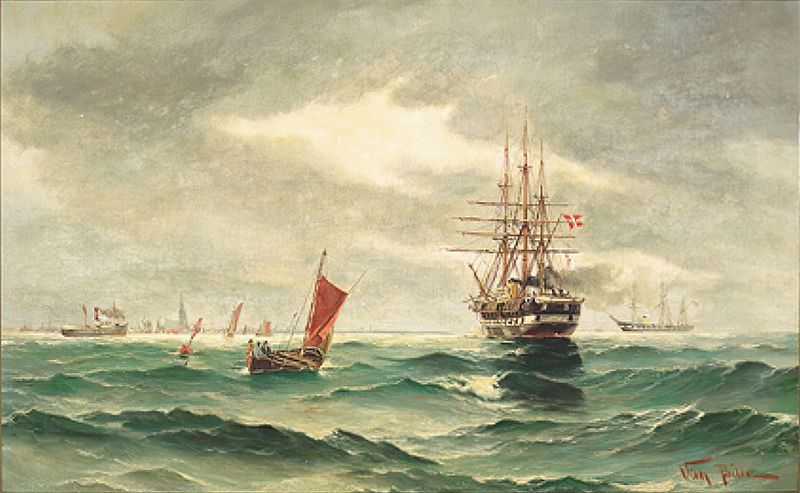
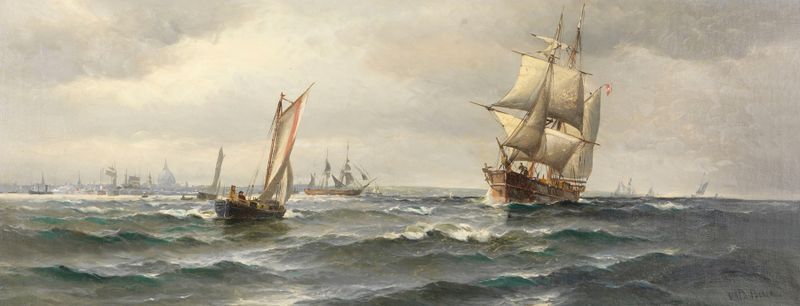
Who listens when art speaks of silence? In Fischerboot und Dampfsegler auf bewegter See, the canvas becomes a portal to an enigmatic world where movement and stillness coexist, allowing viewers to ponder the deeper illusions embedded within the scene. Look to the center, where a small fishing boat rocks gently upon the choppy waves, its vibrant colors contrasting sharply with the muted tones of the larger steam vessel in the background. Notice how the interplay of light and shadow dances across the water, creating a shimmering surface that reflects both the sky and the turmoil beneath. The dynamic composition draws the eye toward the horizon, where clouds loom, hinting at a brewing storm—a reminder of nature’s unpredictable temperament. While the painting presents a vibrant maritime moment, it whispers of the fragility of human endeavor against the vastness of the sea.
The juxtaposition of the rustic fishing boat and the industrial steamship serves as a metaphor for tradition clashing with modernity. The chaos of the waves evokes a sense of unease, while the serene colors surrounding the vessels challenge our perception of security, revealing the thin veil of illusion that covers the true nature of existence. In 1880, Vilhelm Bille created this work during a period marked by rapid industrial change in Europe, where traditional livelihoods were increasingly threatened by technological advancements. Living in Denmark, Bille was influenced by the burgeoning movement of Realism in art, striving to depict everyday life with authenticity.
This painting exemplifies his exploration of maritime themes, connecting the viewer to the existential conversations that the sea has inspired for centuries.