Fisherman on the Riverbank — History & Facts
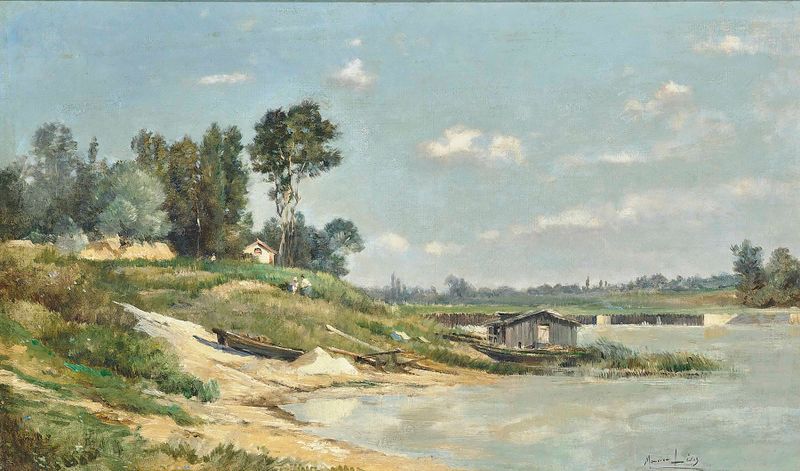
Is this a mirror — or a memory? In Fisherman on the Riverbank, the gentle ripples of the water evoke a sense of rebirth, reflecting both the tranquility of nature and the inner life of the solitary figure. Look to the left at the fisherman, poised in a moment of stillness, his hat casting a shadow over his face, inviting curiosity about his thoughts. The soft, muted palette of greens and browns harmonizes with the delicate play of light across the water's surface, creating a soothing atmosphere. Notice how the brushstrokes vary in intensity; they seem to breathe, oscillating between the solidity of the land and the fluidity of the water, encapsulating the duality of existence. As you absorb the scene, consider the contrast between the fisherman’s quiet labor and the expansive serenity of the river.
This juxtaposition reflects the tension between man and nature — a reminder of the cycles of life that intertwine human endeavor with the timeless rhythm of the natural world. The subtle reflections in the water suggest the idea of introspection, hinting that this moment is as much about the fisherman’s inward journey as it is about his outward task. Maurice Levis created this work in 1888, during a period marked by the rise of Impressionism, which sought to capture fleeting moments through light and color. At this time, he was influenced by his contemporaries while establishing his own voice in a world grappling with modernity.
As artists delved deeper into the relationship between humanity and nature, Levis navigated this exploration, allowing viewers to ponder the significance of existence amidst the serene beauty of a riverside scene.