A River Landscape — History & Facts
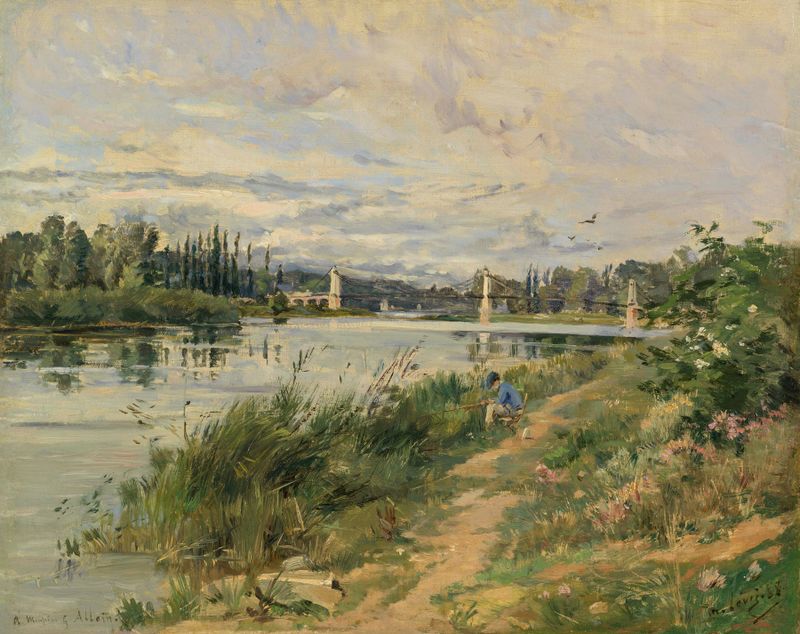
In the tranquil embrace of a river landscape, the subtle play of shadows whispers secrets of nature’s fleeting moments and timeless presence. Look to the foreground where soft greens and lush blues converge, guiding your gaze towards the serene waterway that meanders through the scene. The strokes are fluid, almost rhythmic, echoing the gentle ripple of water. Notice how the dappled light spills through the tree branches, casting intricate patterns across the ground, while the delicate balancing of colors amplifies the calmness of the atmosphere. Yet, beneath this serene facade lies a tension between light and shadow.
The shadows, dark and enveloping, hint at the mysteries lurking just beyond the sunlit areas. They evoke a sense of contemplation, perhaps even solitude, inviting the viewer to reflect on the passage of time as day yields to dusk. The contrast between illumination and obscurity speaks to the duality of existence — joy intertwined with melancholy, the eternal cycle of nature poised between life and the unknown. Levis created this work during a period of growing interest in Impressionism, likely influenced by his studies in Paris, where the movement was evolving.
He sought to capture the essence of landscapes through light and shadow, reflecting not only his personal experiences but also the broader artistic quest for authenticity in depiction. This painting, void of a specific date, embodies the timelessness of nature and the enduring resonance of the artistic journey.