Fishing boats in a harbour — History & Facts
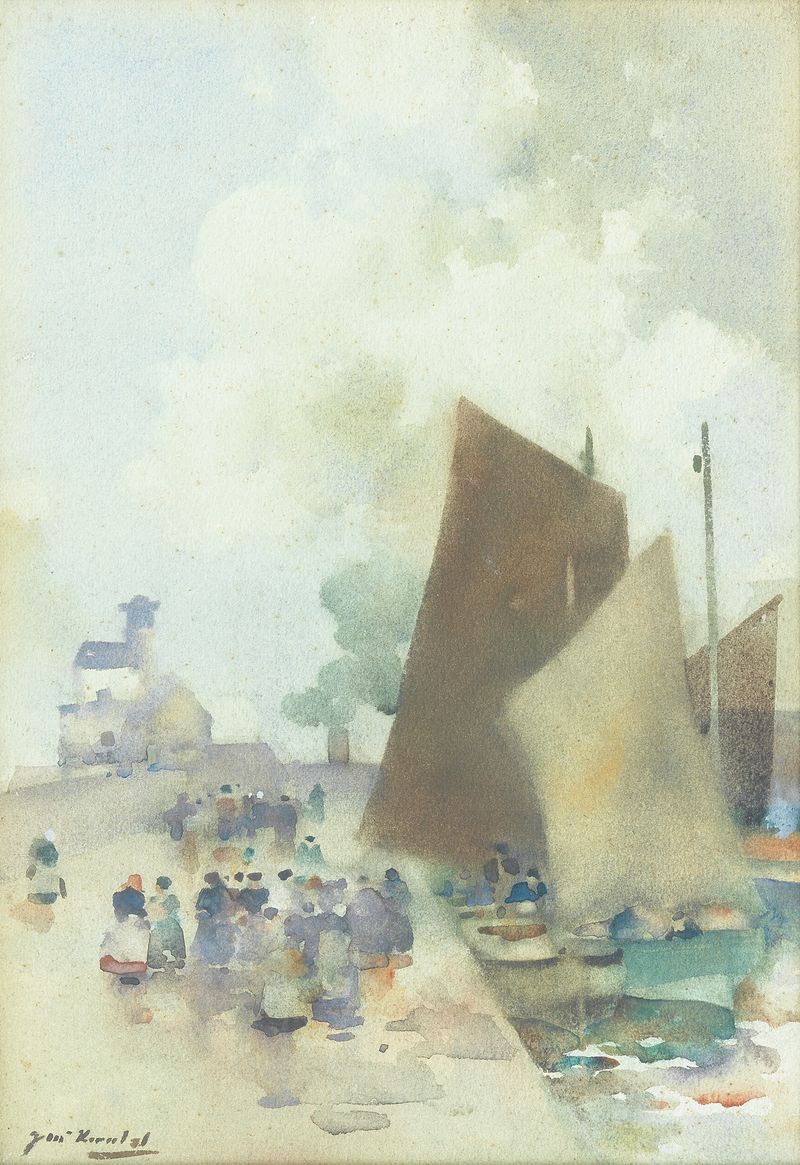
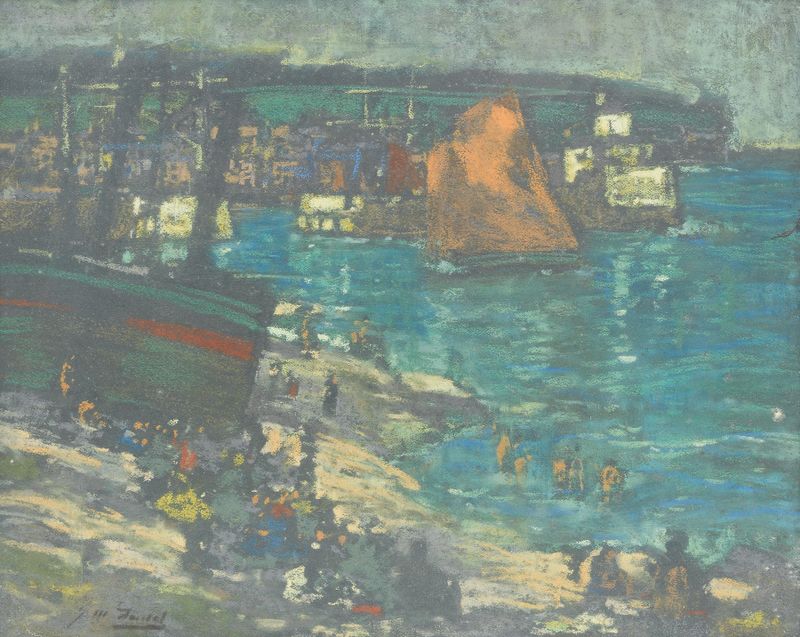
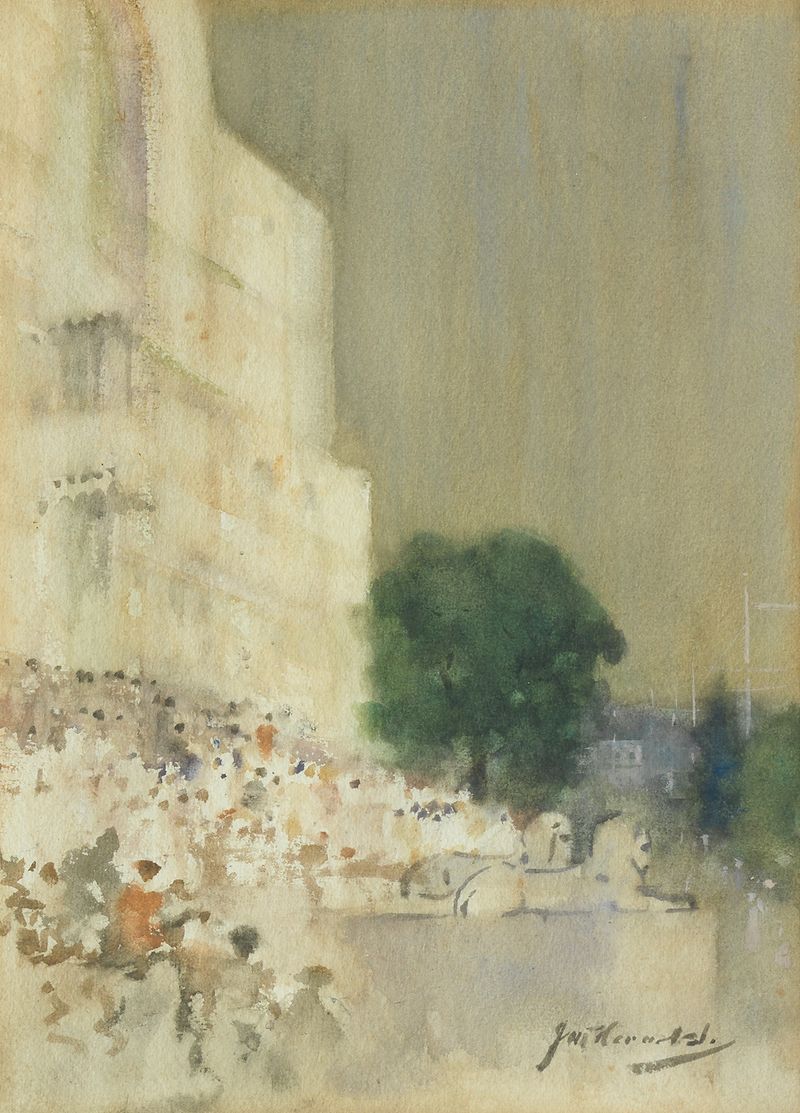
In Fishing Boats in a Harbour, destiny unfurls like a sail against the wind, capturing the fleeting moments that define our existence. Focus first on the serene interplay of colors in the water, where vibrant blues and soft greens bleed into one another, reflecting the sky's gentle hues. To the left, the boats are anchored, their stillness contrasting against the rippling waves, while the delicate brushwork fluidly depicts the sun-drenched surfaces. The composition invites the viewer to trace from the boats to the horizon, suggesting both departure and return, an eternal cycle of life and longing. Within this tranquil setting lies a deeper narrative.
The boats, symbols of labor and survival, evoke a sense of community, while their solitary presence hints at the isolation of destiny's journey. The quiet harbor, with its whisper of wind and water, emphasizes the tension between safety and the unknown, the choices made that lead one to the next port of call. Each brushstroke resonates with the emotional weight of those who navigate these waters, filled with dreams and uncertainties. James Watterston Herald painted this piece during a period marked by personal reflection and artistic exploration, around the mid-19th century.
It was a time when the maritime theme was popular among artists, capturing the essence of everyday life and labor. Herald’s work mirrored the changing tides of societal shifts and personal stories, drawing inspiration from the bustling scenes of harbors and the intimate connections forged by those who depend on the sea.