Fishing Boats on Shore, Dieppe — History & Facts
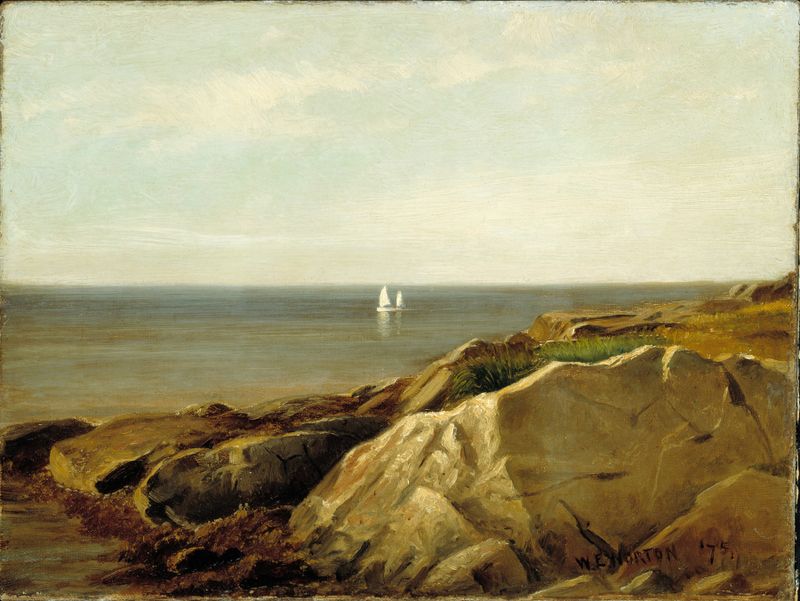
Could a single brushstroke hold eternity? In Fishing Boats on Shore, Dieppe, every stroke reverberates with the tension between nature’s beauty and the lurking violence of the sea. The tranquil shoreline conceals the powerful undercurrents that shape both the scene and the lives within it. Look closely at the lower left, where the weathered hull of a fishing boat rests against the sand. The paint is thick and textured, almost sculptural, capturing the struggle between man and nature.
Notice how the muted reds and browns of the boat contrast sharply with the soft blues and greens of the waves, drawing your gaze to the vulnerable vessels that seem both at home and at risk. The light dances across the water’s surface, hinting at the duality of peace and peril that defines this coastal existence. In the scene’s quietude, an ominous narrative simmers beneath the surface. The boats, though anchored safely, are surrounded by restless waves, suggesting the ever-present threat of a sudden storm.
The shadows cast on the sand imply an impending violence, echoing the harsh realities faced by fishermen who constantly grapple with the sea's unpredictable temperament. Each detail—a flapping net or a distant gull—whispers of sacrifice and survival, invoking a deeper understanding of human fragility against nature’s might. William Edward Norton painted this work in 1887 while living in Dieppe, France, a bustling port town. During this period, he explored themes of maritime life, reflecting both the beauty and the brutal challenges faced by fishermen in the age of industrialization.
The ocean, a source of sustenance, also embodies the violence of nature, a recurring tension that resonates throughout his body of work.