Fishing By The Coast — History & Facts
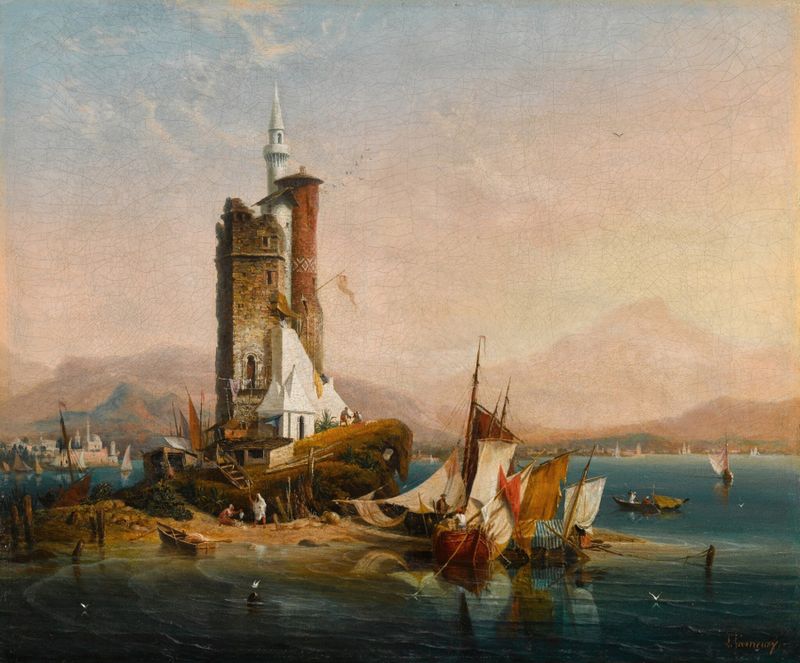
Can paint confess what words never could? In Fishing By The Coast, the artist captures the fragile interplay between life and decay, inviting viewers to explore the silent stories that linger beneath the surface. Look to the left at the small fishing boat, its hull weathered and worn, a testament to countless voyages into the waves. The soft, muted colors evoke a serene yet melancholic atmosphere, while the brushwork subtly suggests the rhythmic movement of the water. Notice how the light caresses the shoreline, illuminating the fisherman’s figure, casting long shadows that reach toward the sand.
Each stroke feels deliberate, weaving a tapestry of textures that engage both the eye and the heart, compelling us to linger. Beneath this tranquil exterior lies a profound exploration of mortality and the passage of time. The fisherman, solitary against the sprawling ocean, embodies a sense of quiet perseverance amidst the decay of both vessel and beach. The contrast between the vibrant life of the sea and the signs of erosion along the shore speaks to the tension between hope and loss, reminding us that all beauty is transient.
Each detail, whether the drifting seaweed or the battered nets, echoes the inevitability of nature’s cycle. Created in the early 19th century, Fishing By The Coast reflects Ambroise-Louis Garneray's engagement with Romanticism during a time when French art was transitioning towards capturing emotional depth and personal expression. Garneray, living in a period marked by both artistic innovation and societal change, was influenced by the emerging ideas of nature and individuality, leading him to depict scenes that resonate with intimate significance and a poignant sense of place.