
Flat Iron Building — History & Facts
Can paint confess what words never could? In Flat Iron Building, the interplay of light and shadow reveals secrets as the towering structure stands proudly, a testament to ambition and innovation. Look to the left at the soft, golden hue of the sunlight cascading down the side of the building, illuminating its distinct triangular shape. Notice how the shadows stretch dramatically across the street, almost reaching out as if to embrace the bustling city life below. The contrast between the brilliant light and the enveloping shadows not only emphasizes the architectural grandeur but also imbues the scene with a sense of movement, hinting at the vibrancy of early 20th-century New York. Yet, a deeper reflection lies within the contrasts of the composition.
The juxtaposition of the solid, unyielding structure against the fleeting shadows evokes a tension between permanence and transience—an eternal reminder of the moments that pass by in a city that never sleeps. The meticulous detail of the building’s façade, with its ornamental flourishes, suggests a pride in craftsmanship, while the obscured figures below are mere silhouettes of life, emphasizing the anonymity of urban existence. In 1904, as Cooper painted this work in New York, he was deeply influenced by the rise of modern architecture and the excitement surrounding the city’s rapid transformation. This era witnessed a flourishing of urban aesthetics, where artists explored new perspectives and subjects, mirroring the dynamic lives of the people who inhabited these spaces.
Cooper, an advocate for the beauty of the city, captured not just a moment, but the essence of an era in flux.
More Artworks by Colin Campbell Cooper
Browse all →
North Portico, The White House, Washington, D.C.
Colin Campbell Cooper
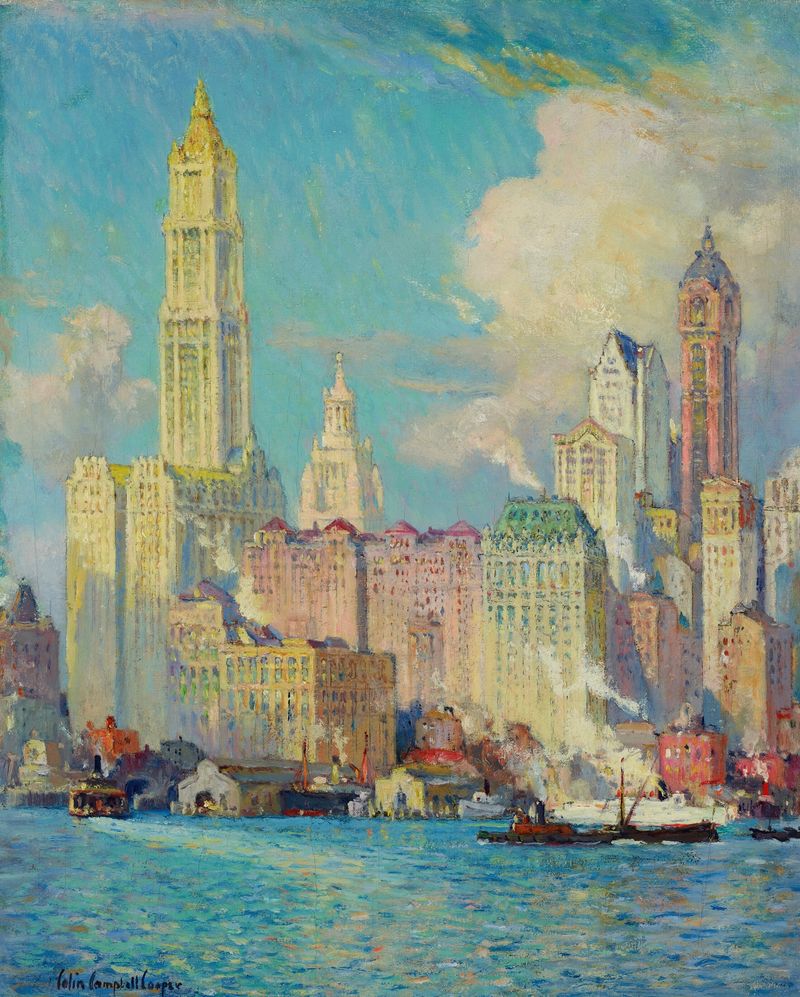
View of Wall Street
Colin Campbell Cooper
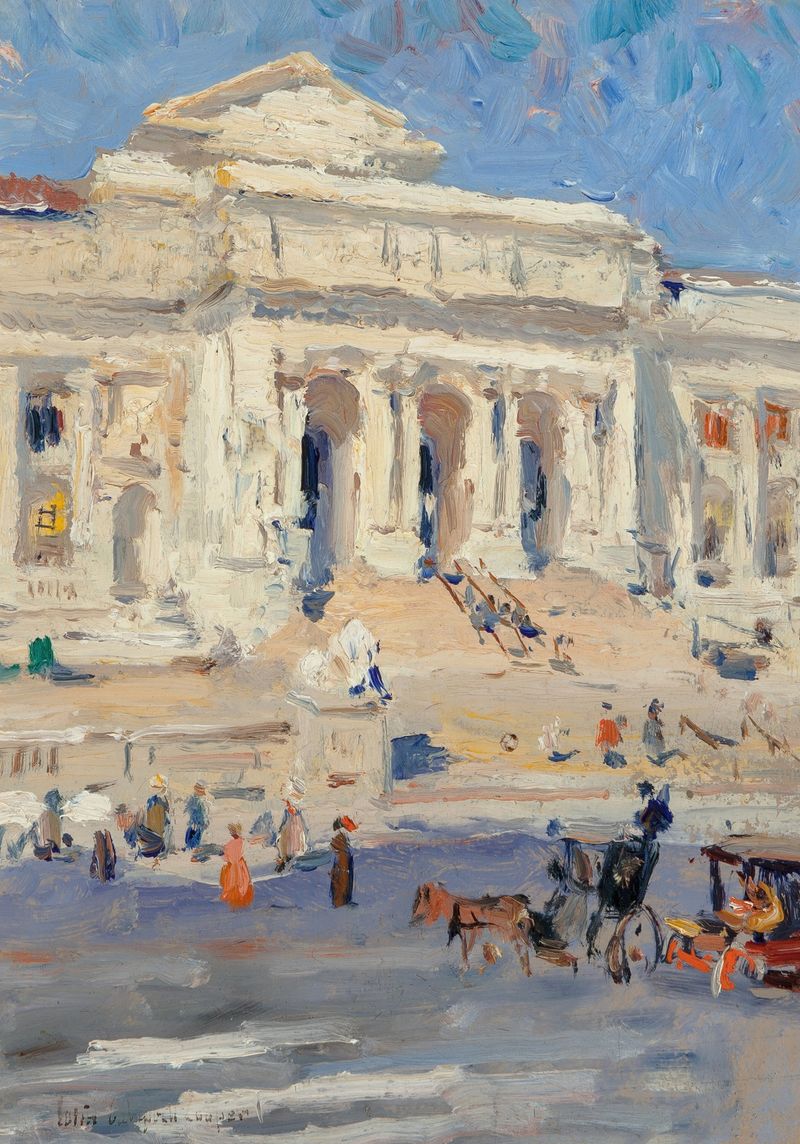
New York Public Library
Colin Campbell Cooper

A Canal in Rotterdam
Colin Campbell Cooper

The Broad Exchange, Broad Street, New York
Colin Campbell Cooper
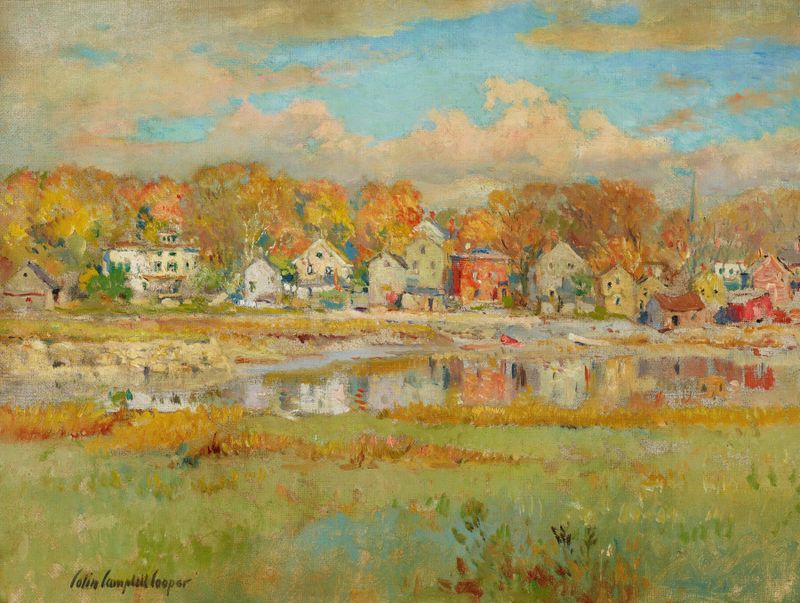
The Other Side of the River
Colin Campbell Cooper
More Architecture Art
Browse all →
The statue of Liberty
Frédéric Auguste Bartholdi

View of Houses in Delft, Known as ‘The Little Street’
Johannes Vermeer

View of Houses in Delft, Known as ‘The Little Street’
Johannes Vermeer

The Cathedral in Rouen. The portal, Grey Weather
Claude Monet

The yellow house
Vincent van Gogh

The Church in Auvers-sur-Oise, View from the Chevet
Vincent van Gogh