Flood near Maitland — History & Facts
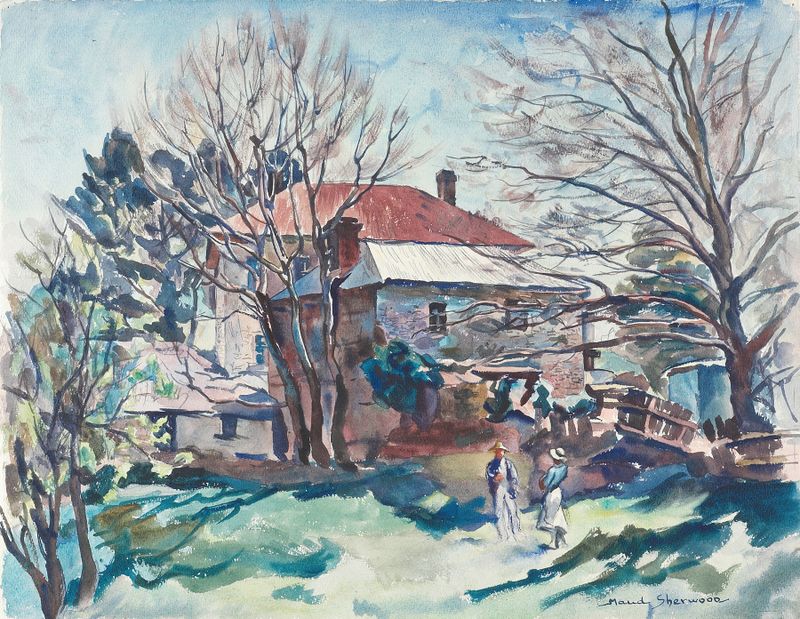
This sentiment echoes through the tumultuous waters in a scene where nature's fury meets human fragility, revealing the thin veil between madness and tranquility. Look to the center, where vibrant blues and turbulent greens collide, swirling in a chaotic dance that depicts the flood's relentless grasp. The artist employs broad, sweeping brushstrokes that create a sense of movement, as if the water itself is alive, pressing against the calm of the distant landscape. The muted earth tones at the edges contrast profoundly with the vibrant energy of the flood, drawing the eye and grounding the viewer amidst the turmoil. In this work, the juxtaposition of the serene horizon against the violent water evokes a profound emotional tension.
The flood, a symbol of rage and upheaval, coexists with the stillness of the distant trees — a haunting reminder of life’s unpredictability. Furthermore, the gold undertones shimmering throughout hint at the madness of beauty, suggesting that within chaos, there exists a glimmer of hope or clarity, a duality that resonates deeply within the human experience. During 1947-1948, Maud Sherwood created this evocative piece while living in New York, a time marked by post-war disillusionment and a search for identity in the art world. As abstraction gained momentum, she explored the emotional weight of landscapes through a lens of personal and collective memory, reflecting the tumultuous social changes around her.
In this context, the work becomes an exploration of both nature’s power and the resilience of the human spirit.