
Florence, Palazzo Vecchio — History & Facts
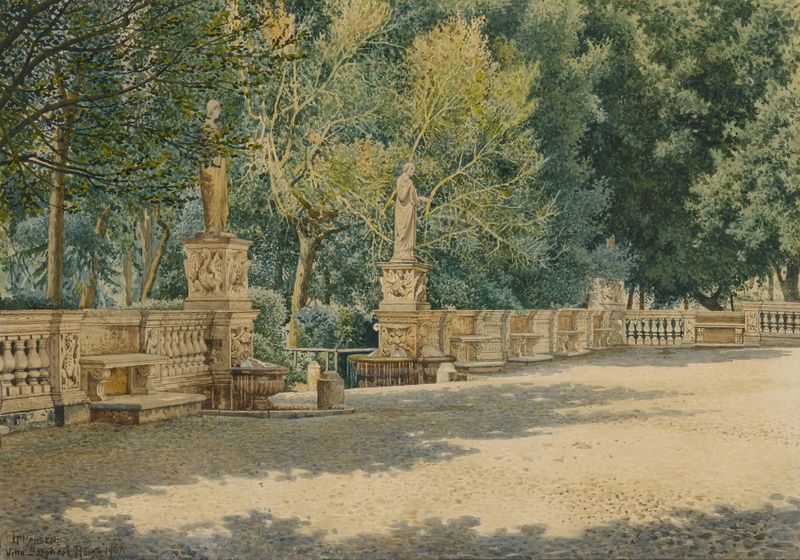
In Florence, Palazzo Vecchio, the ecstasy of a moment suspended in time invites reflection on beauty lost and reclaimed. The image resonates with vibrant life, yet whispers the fragility of our experiences. Look to the left at the towering Palazzo Vecchio, its imposing architecture bathed in the warm embrace of golden light. The careful brushwork reveals intricate details, from the rough hewn stones to the delicate arches, all set against a backdrop of a crystal-blue sky.
Notice how the interplay of light and shadow animates the scene, creating a dance of form that breathes life into the immensity of the structure while evoking a sense of nostalgia. Delve deeper, and you’ll uncover the emotional richness of the piece. The juxtaposition of the solid stone against ephemeral clouds hints at the tension between permanence and transience, each stroke inviting viewers to ponder the passage of time. The vibrancy of the colors suggests both joy and longing, reflecting the artist's connection to the city and infusing the work with a spirit that transcends mere representation. Josef Theodor Hansen created this artwork in 1891 while working in Florence, a city then bustling with artistic renewal and cultural pride.
His life was marked by a deep appreciation for the historical brilliance of Italian Renaissance art. In the broader context of the art world, this period saw a revival of interest in classical themes, positioning Hansen among contemporaries seeking to bridge the past with modern sensibilities.
More Artworks by Josef Theodor Hansen
Browse all →
More Architecture Art
Browse all →
The statue of Liberty
Frédéric Auguste Bartholdi

View of Houses in Delft, Known as ‘The Little Street’
Johannes Vermeer

View of Houses in Delft, Known as ‘The Little Street’
Johannes Vermeer

The Cathedral in Rouen. The portal, Grey Weather
Claude Monet

The yellow house
Vincent van Gogh

The Church in Auvers-sur-Oise, View from the Chevet
Vincent van Gogh