
Tempel der Nike, Akropolis — History & Facts
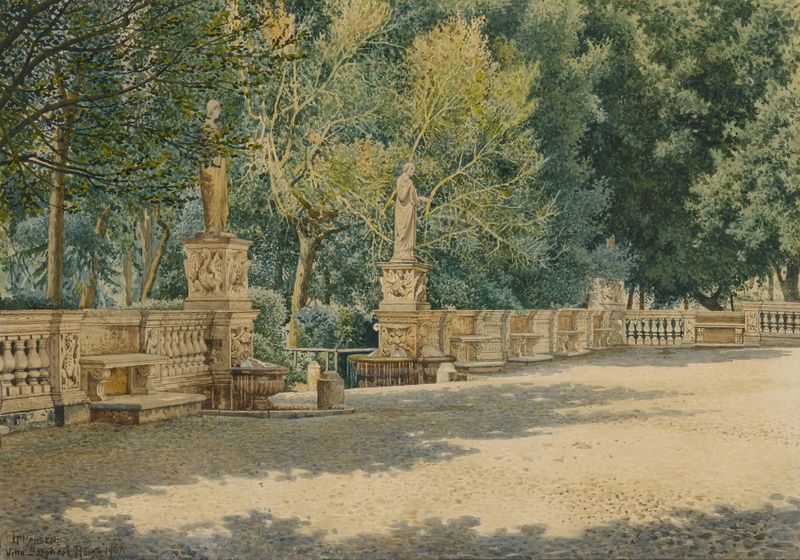
What if silence could speak through light? In the stillness of ancient ruins, it whispers tales of glory, decay, and the passage of time. Look to the left at the majestic columns, their capitals adorned with intricate details that speak to the grandeur of a forgotten era. Notice the soft interplay of shadows and sunlight, where the warm golden hues illuminate the remnants of stone while cool greys hint at the encroaching hand of time. The artist meticulously captures the textures of each crumbling surface, inviting you to trace the delicate lines that weave the history of this hallowed site. In the foreground, the gradual decay symbolizes not just the physical deterioration of man-made structures, but a deeper reflection on the impermanence of human ambition.
The juxtaposition of light and shadow evokes an emotional tension, echoing the duality of reverence and loss. Each fragment of stone becomes a testament to the resilience of culture even as it succumbs to nature, urging the viewer to contemplate what is left behind when the echoes of past triumphs fade. Josef Theodor Hansen painted this evocative piece between 1883 and 1903, a period marked by renewed interest in classical antiquity. While living in Greece, he was deeply influenced by the ruins and cultural heritage that surrounded him.
The late 19th century was a time when artists turned their gaze to history, seeking to merge nostalgia with modern expression, and Hansen’s work embodies this pursuit with a haunting beauty that resonates through the ages.
More Artworks by Josef Theodor Hansen
Browse all →
More Architecture Art
Browse all →
The statue of Liberty
Frédéric Auguste Bartholdi

View of Houses in Delft, Known as ‘The Little Street’
Johannes Vermeer

View of Houses in Delft, Known as ‘The Little Street’
Johannes Vermeer

The Cathedral in Rouen. The portal, Grey Weather
Claude Monet

The yellow house
Vincent van Gogh

The Church in Auvers-sur-Oise, View from the Chevet
Vincent van Gogh