Flußlandschaft mit Gänseliesl — History & Facts
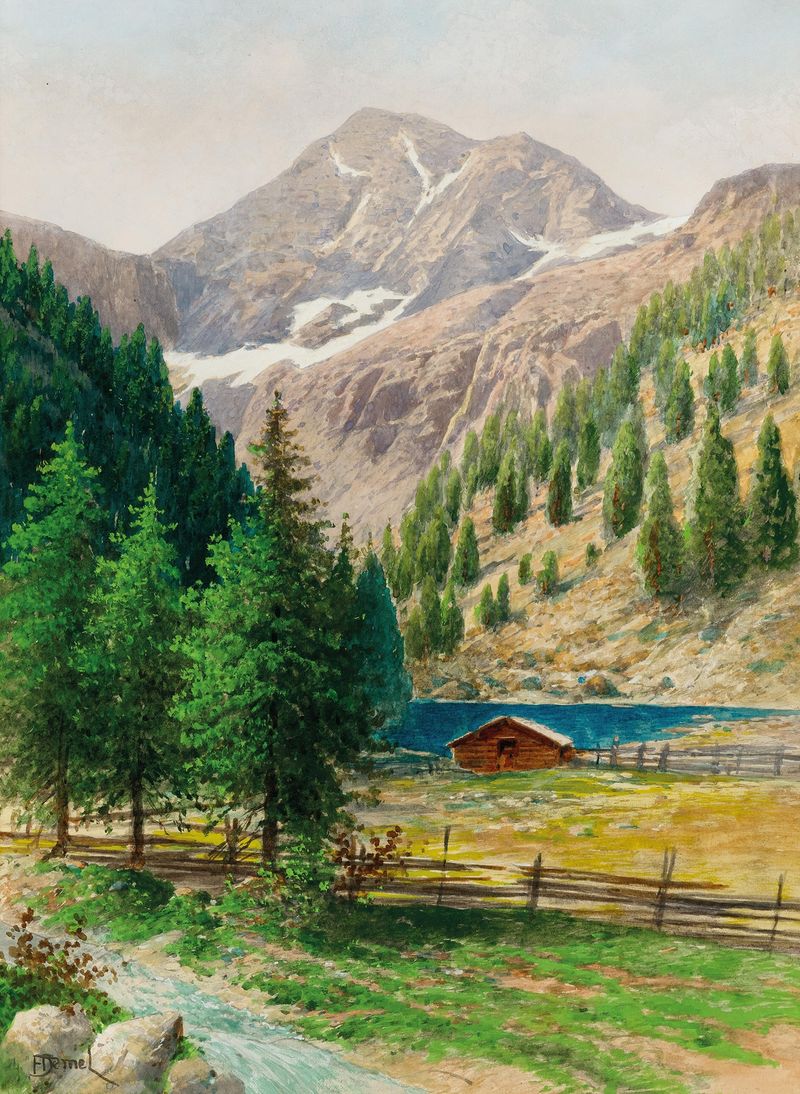
The canvas doesn’t lie — it simply waits. Every stroke, every hue tells a story far deeper than what meets the eye. Look to the left at the tranquil flow of the river, where soft azure shades blend into emerald greens, capturing the serenity of the landscape. The gentle curves of the water mirror the softness of the sky, while the delicate brushwork suggests the movement of a light breeze.
Notice how the figures of two young girls, seemingly lost in their own world, stand near the water’s edge, their vibrant dresses punctuating the natural palette with bursts of warmth. This interplay between figures and landscape evokes a sense of innocence and nostalgia, as if time has paused to encapsulate a fleeting moment. Hidden in the composition are the tensions between nature and human presence. The distant mountains loom quietly, their solid forms contrasting with the fluidity of the river, while the girls’ laughter appears muted against the tranquil backdrop.
The subtle interplay of light and shadow enhances the emotional depth, suggesting both harmony and isolation in this idyllic yet imperfect reality. Each detail, from the rippling water to the light dappling the girls' faces, invites viewers to reflect on the memories that shape our understanding of such peaceful scenes. Franz Demel painted this work during a period when he sought to blend realism with romanticism, capturing the essence of everyday life in the natural world. Active in the late 19th to early 20th century, he surrounded himself with the burgeoning artistic movements of his time, drawing inspiration from his idyllic surroundings.
This was a time of personal exploration for the artist, as he navigated the boundaries of representation and emotion within his landscape paintings.