Fly Fishing — History & Facts
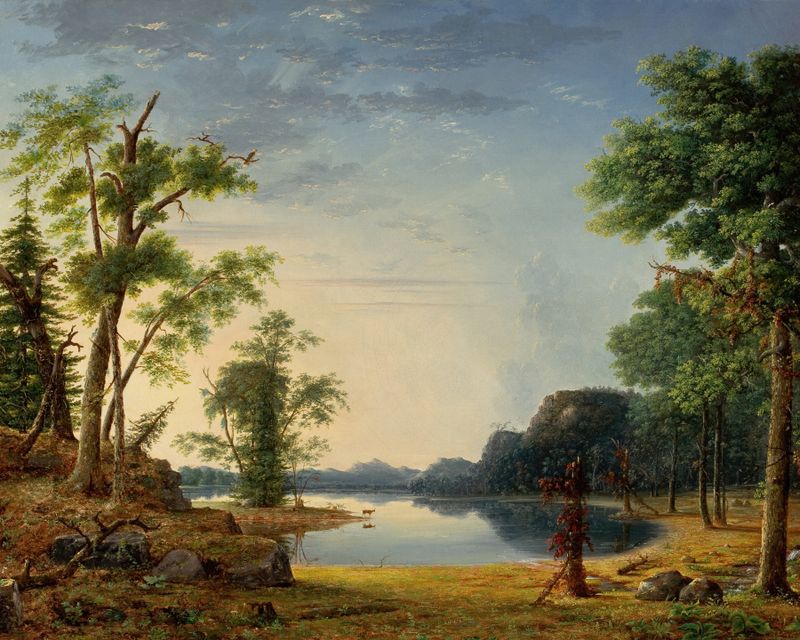
In this serene moment, faith intertwines with nature, capturing the essence of quiet reflection. Look to the center of the canvas, where a solitary figure stands poised on a rocky bank, rod in hand, as he casts his line into the shimmering waters. The artist employs a delicate palette of blues and greens, mirroring the fluidity of the stream and the surrounding foliage. Notice how the light dances upon the surface, creating a halo effect around the angler, suggesting both solitude and divine connection.
The gentle ripples in the water echo the rhythm of his focused movement, inviting the viewer to pause and contemplate the quietude. In the subtle play of light and shadow, deeper meanings emerge—faith in patience, the tranquility of nature, and a moment of personal introspection. The figure’s stance is resolute, yet the surrounding environment seems to cradle him, reflecting a harmony between the angler and the landscape that extends beyond mere recreation. The subtle contrasts between the soft hues of the water and the rugged texture of the rocks evoke a sense of balance, symbolizing the interplay of human endeavor and the natural world. In 1881, during a period of rapid change in America, the artist captured this scene amidst a burgeoning interest in naturalism and outdoor pursuits.
Working in Connecticut, Moore sought to encapsulate moments of stillness against the backdrop of a society increasingly driven by industrial progress. This painting reflects not only his artistic direction but also the cultural shift that emphasized a return to nature and personal reflection.