Sunday (In the Forest) — History & Facts
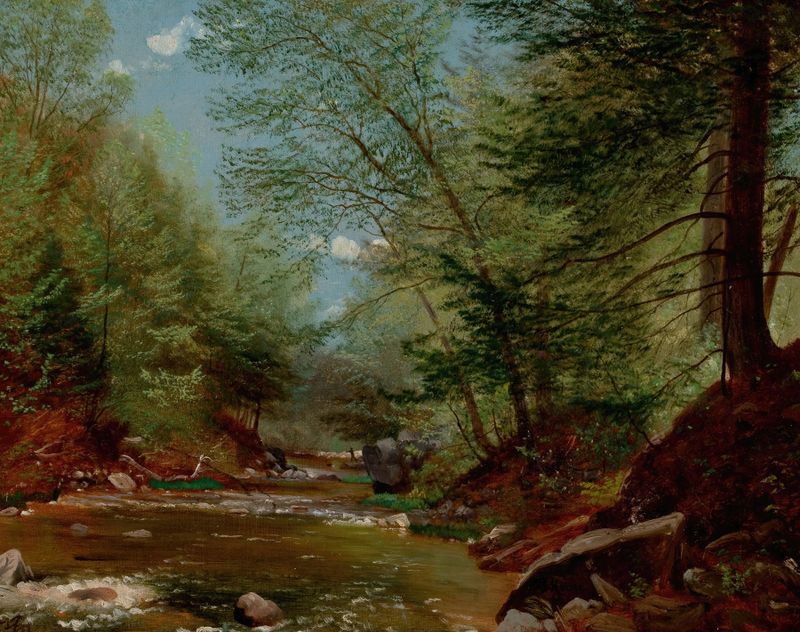
This sentiment whispers through the emerald leaves and golden hues of a Sunday stroll in the forest, where tranquility often masks deeper emotions. Look to the center of the canvas where a sun-drenched path invites the viewer forward, flanked by elegantly arching trees. The interplay of light and shadow creates a dance of warmth, as dappled sunlight filters through the foliage, giving life to the rich greens and earthy browns. Notice how the artist's brushstrokes emphasize the texture of the bark and the softness of the grass, drawing you into the scene with an almost palpable sense of place. Yet, beneath this serene facade lies a subtle tension.
The path, while inviting, suggests a journey that is both outward and inward, hinting at personal reflection and perhaps longing. The juxtaposition of bright sunlight and the cool shadowed areas evokes feelings of nostalgia—reminding us of moments lost and the bittersweet nature of memory. The trees, standing witness, seem to hold secrets of the past, adding to the emotional weight carried by the scene. In 1858, Nelson Augustus Moore painted this work during a time of artistic exploration in America, where the Romantic movement was beginning to flourish.
Living in a burgeoning country, Moore captured the essence of nature's beauty while grappling with the complexities of life. As he established his career, the themes of nostalgia and the interplay of light became significant hallmarks of his artistic voice, reflecting his own experiences and the broader cultural context of his time.