Forest And Native House — History & Facts
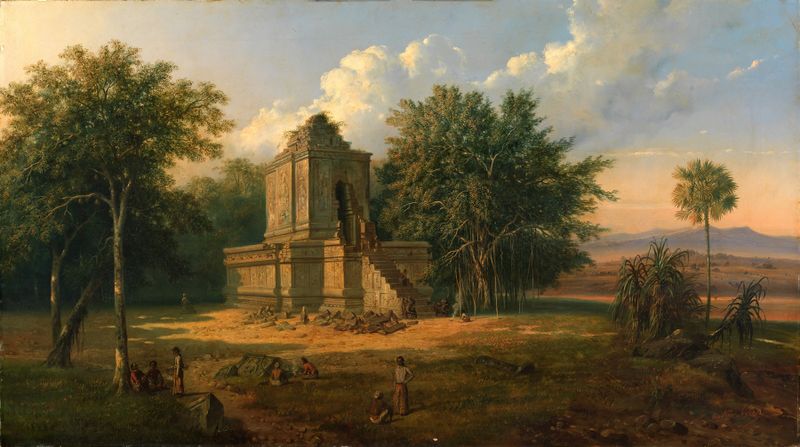
What secret hides in the quiet of the canvas? In an era where nature intertwines with culture, the serenity of a forest cradles the essence of innocence, inviting reflection and contemplation. Look to the left at the towering trees, their lush green leaves contrasted against the earthy browns of the native house nestled within. The play of light filters through the branches, casting gentle shadows that hint at the passage of time and the undisturbed peace of this secluded environment. Notice how the artist’s brushwork creates texture in the foliage, each stroke revealing the vibrancy of life and the homespun warmth of the dwelling. In the foreground, the juxtaposition of man-made structure against the wildness of nature suggests a delicate balance.
The house, seemingly untouched, embodies a testament to harmony between humanity and the earth, while the subtle hints of light suggest a narrative of innocence, inviting us to ponder the relationship between civilization and the untamed wilderness. The use of color reinforces this duality—earthy tones echo familiarity while vibrant greens breathe life into the scene, evoking both nostalgia and a yearning for simplicity. Raden Saleh crafted this piece in 1860 while living in the Netherlands, navigating the complexities of his identity as a Javanese artist abroad. During this time, Western art was deeply influenced by Romanticism, and Saleh’s works often reflected his longing for his homeland and a desire to bridge Eastern and Western aesthetics.
This painting emerges from a period of cultural exploration and personal introspection, showcasing his unique perspective and mastery in depicting the beauty of his native land.