Forest fire — History & Facts
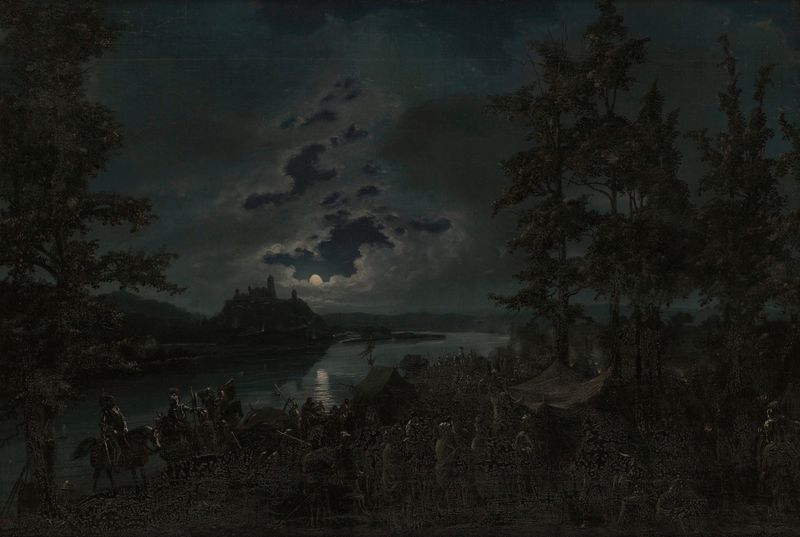
In the emptiness of despair, what remnants of life linger in the ashes? Look to the center of the canvas, where the charred remains of once-mighty trees stand as stark silhouettes against a brooding sky. The vivid reds and deep oranges swirl together, betraying the chaos of flames that once danced through the forest. Notice how the artist captures the devastation with textures that seem to vibrate on the surface—each stroke an echo of the wildness lost to the inferno.
The foreground is dark and hollow, a mourning ground for the fallen, while flickers of light struggle to penetrate the haze in the background. Beneath this vivid display of destruction lies a poignant contrast between life and death. The juxtaposition of fiery hues against the desolate landscape invokes a sense of urgency and loss, inviting contemplation of the cyclical nature of destruction and rebirth. The emptiness resonates profoundly, suggesting that from the ashes of fire springs the potential for renewal, yet it also serves as a stark reminder of the costs borne by nature in the face of human encroachment.
This emotional tension invites viewers to consider both personal and collective loss, as well as the fragility of existence itself. Vincentas Dmachauskas painted this piece in 1860, during a time of burgeoning Romanticism that sought to capture the sublime forces of nature. Living and working in Lithuania, the artist was influenced by the shifting landscapes around him and the emotional responses they evoked. This particular piece exemplifies a moment in art history where nature was both revered and feared, reflecting broader societal concerns about humanity's relationship with the natural world.