
Crusaders attacking the Castle of Punia — History & Facts
What secret hides in the quiet of the canvas? Beneath the chaos of a battle, a deeper story of transcendence and conflict awaits to be unveiled. Look to the left at the imposing stone walls of the castle, where shadows cling tightly, hinting at the uncertainty of defense. The vivid reds and blacks of the crusaders stand in stark contrast to the muted earth tones of the fortress, drawing the eye to the dynamic clash between the warriors and their stronghold. Notice the movement in the brushstrokes—the swirling energy that captures the frenzy of action, yet also reflects the stillness of the moment just before the first strike. The juxtaposition of light and shadow creates a tension that echoes through the composition, suggesting the duality of hope and despair.
As the crusaders surge forward, their determination is palpable, yet the fortress seems to stand as a silent witness to the inevitable destruction, embodying both strength and vulnerability. This layered narrative invites contemplation on the nature of conflict—how the quest for glory can be intertwined with the sorrow of loss, and how each battle carries the weight of history. Vincentas Dmachauskas painted this work in 1837, during a period characterized by a burgeoning interest in historical themes and national identity within the art world. Emerging from Lithuania, he was influenced by Romanticism, which sought to evoke deep emotions and a connection to the past.
At that time, Eastern Europe was in flux, navigating its identity against a backdrop of political turmoil and artistic exploration, and this painting captures the essence of that struggle.
More Artworks by Vincentas Dmachauskas
Browse all →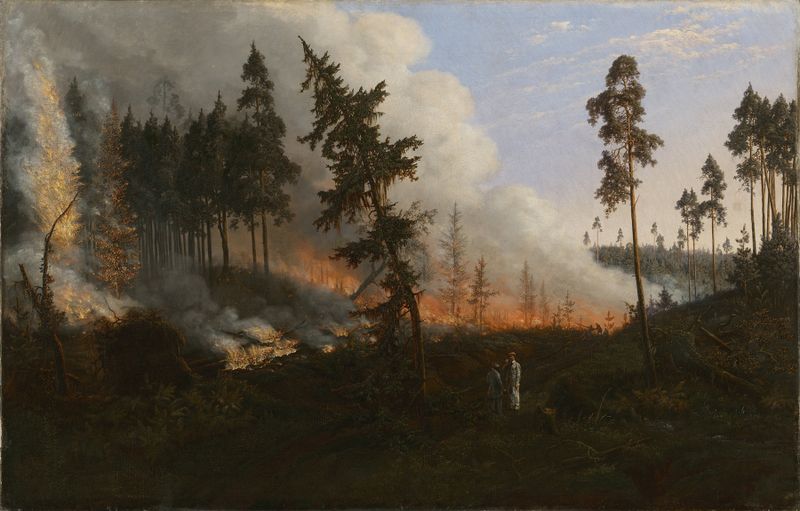
More Historical Art
Browse all →
The Night Watch Militia Company of District II under the Command of Captain Frans Banninck Cocq
Rembrandt van Rijn

Lincoln Memorial
Henry Bacon

The Third of May 1808
Francisco de Goya

Isaac and Rebecca, Known as ‘The Jewish Bride’
Rembrandt van Rijn

The Charge of the Mamelukes (1814)
Francisco de Goya

De vier ruiters van de apocalyps
Albrecht Dürer