Forest landscape — History & Facts
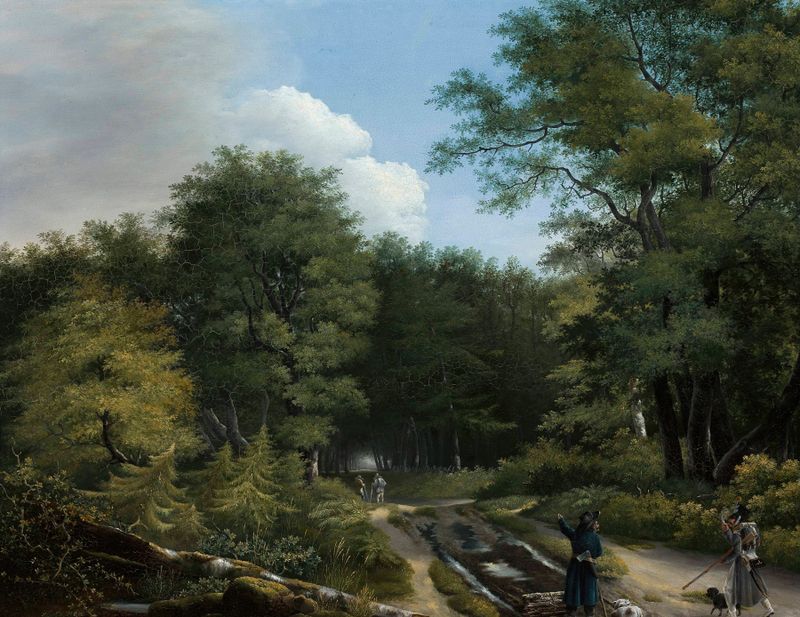
Where does light end, and longing begin? In the tranquility of a forest, the boundary between the seen and the felt dissolves, leaving only whispers of fleeting moments. Focus on the interplay of light filtering through the canopy as it dances upon the underbrush, illuminating patches of delicate wildflowers. The soft greens and earthy browns dominate the canvas, creating a serene yet fragile atmosphere that invites contemplation. Notice how the artist's brushwork captures the gentle sway of the trees, echoing a silent conversation between nature and the observer. Yet, beneath this peaceful facade lies a tension between permanence and transience.
The sturdy trunks stand resolute, while the vibrant foliage hints at nature’s frailty, ever vulnerable to the passage of time. Small details, like the scattering of leaves on the forest floor, evoke a sense of nostalgia—reminders of seasons past and the inevitable cycle of life. This delicate balance between strength and fragility speaks to the viewer's own vulnerabilities, inviting introspection. Kazimierz Żwan painted this piece between 1830 and 1858, a time marked by significant changes in both his life and the broader art world.
Settling in Poland, he became associated with the Romantic movement, which emphasized emotion and the beauty of nature. During these years, Europe was undergoing political upheaval and cultural transformation, reflecting in the heightened sensitivity and emotional depth of his landscapes.