Forest road — History & Facts
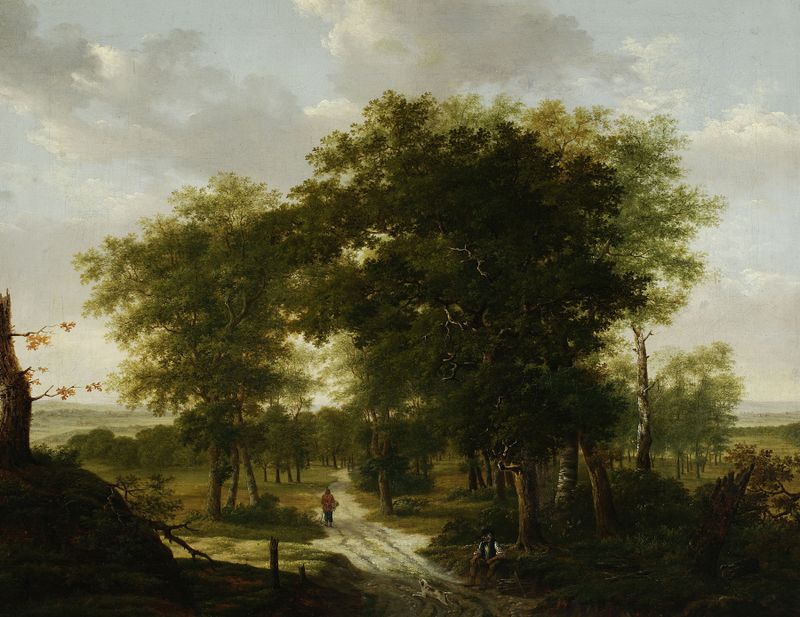
In that stillness lies a world alive with movement, beckoning the viewer to engage and explore. Look to the center where the winding path invites you into the depths of the forest, each brushstroke suggesting the gentle sway of trees swaying in the breeze. The delicate interplay of light and shadow casts a dappled effect on the road, drawing your gaze forward while the rich greens and browns create a tapestry of natural beauty. Notice how the artist employs soft hues and fluid lines to evoke a sense of serenity and anticipation; the forest seems to breathe, waiting patiently for footsteps. Yet, beneath this tranquil surface, a tension simmers.
The road, leading away from the viewer, suggests the unknown, where adventure intertwines with uncertainty. The trees, though majestic, stand sentinel-like, hinting at secrets both inviting and foreboding. This duality of movement — the alluring path and the enclosing forest — embodies life's journey, balancing comfort and trepidation. Kazimierz Żwan painted Forest Road in 1824 during a period of burgeoning Romanticism in art, emphasizing emotion and the sublime beauty of nature.
This work emerged in a time when artists were increasingly drawn to the exploration of landscapes, underscoring humanity's connection to the natural world. Living in Poland, Żwan was influenced by the shifting cultural landscape, where the appreciation of local scenery became a vehicle for personal expression and national pride.