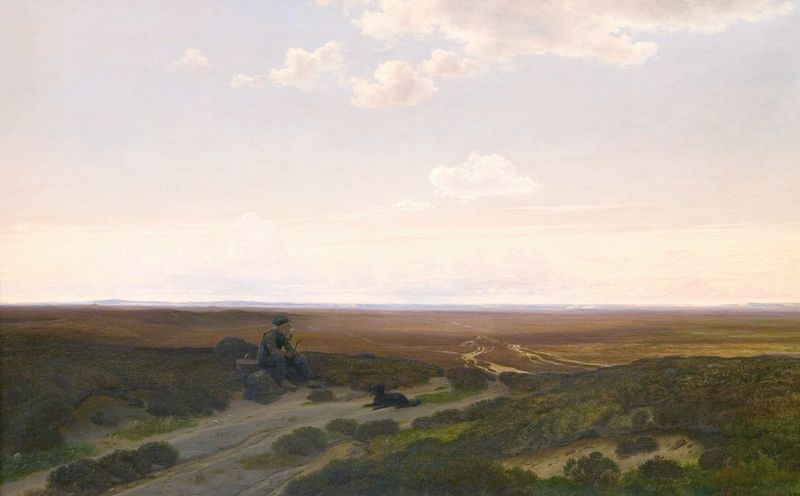
Forårslandskab med regnbyger. Sydsjælland — History & Facts
In the gentle embrace of spring, the landscape pulses with life, yet beneath its tranquil surface lies a history of violence and upheaval. Nature can be a battlefield, a place where beauty and chaos collide, reminding us of the fragile balance that sustains existence. Look to the center of the canvas where dark, ominous clouds loom, their heavy forms contrasting sharply with the vibrant greens of the meadows below. The painter's deft use of brushwork creates a sense of movement, almost as if the wind carries whispers from the sky to the earth.
Notice how the light falls upon the rain-soaked fields, accentuating the rich textures of grass and soil, while distant figures appear as silhouettes, absorbed in the stillness before the storm. The juxtaposition of the serene landscape with the impending rain hints at a deeper emotional tension. It evokes the duality of nature: a source of nourishment that can also unleash ferocity. The figures in the background, seemingly unaware of the brewing tempest, symbolize the ignorance of humanity toward nature's unpredictable wrath.
As the rain begins to fall, it serves as a reminder that beauty often coexists with danger, a thread woven into the fabric of life itself. Hans Friis painted Forårslandskab med regnbyger. Sydsjælland in 1879 while living in Denmark, a period marked by the resurgence of national identity and an appreciation for the natural world. He was part of the movement that sought to capture the essence of his homeland through realistic landscapes.
This work reflects his deep connection to the rural scene and the atmospheric elements that influence it, embodying both the wonder and volatility inherent in nature.