French Landscape — History & Facts
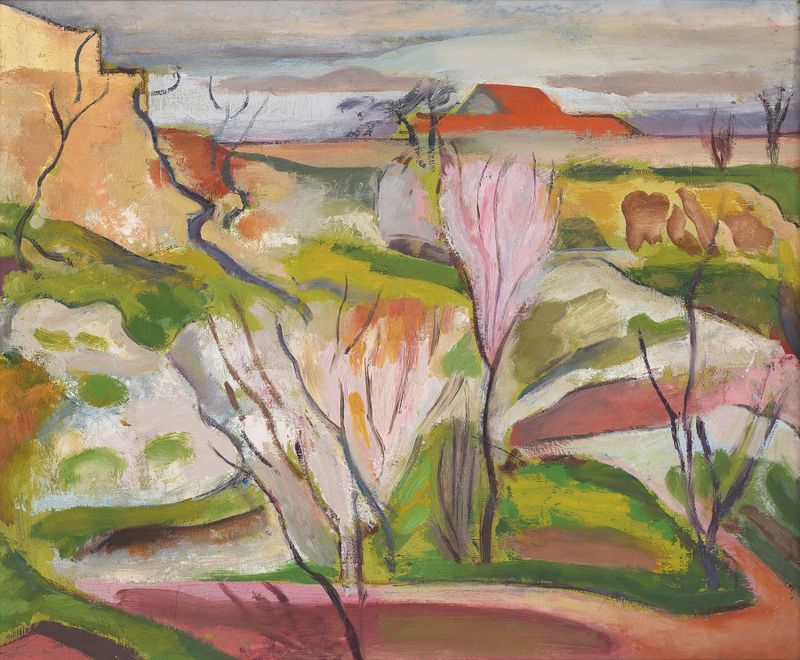
Who listens when art speaks of silence? In French Landscape, the stillness of the scene invites a profound contemplation of desire, yearning quietly beneath the surface of vibrant color and brushstroke. Look to the horizon where soft, rolling hills cradle the sky, a delicate interplay of greens and yellows that beckons your gaze. The foreground bursts with flowers, their vivid hues contrasting the deeper, muted tones of the trees beyond. Notice how the light dances across the canvas, casting subtle shadows that highlight the contours of the landscape, creating a sense of depth and inviting the viewer to wander through the fields almost tangibly. Yet, there’s an undercurrent of longing woven throughout this seemingly tranquil vista.
The tranquil scene suggests a fleeting moment, as if time stands still, yet the vibrant colors pulse with emotion, hinting at life's transient nature. The juxtaposition between the verdant landscape and the encroaching horizon evokes a desire for connection with nature, evoking both serenity and a hint of melancholy, as if the land itself yearns to be remembered. Created in 1923, this piece reflects Bernard Meninsky's life and the artistic climate of post-World War I Europe. During this time, Meninsky was exploring the interplay between color and form, seeking to convey deeper emotional truths.
The art world was evolving through movements like Impressionism and Post-Impressionism, and Meninsky's work reveals his connection to these influences, infusing his landscapes with a rich emotional resonance that captures the complexities of desire and longing in a changing world.