
Hampstead House, rear view — History & Facts
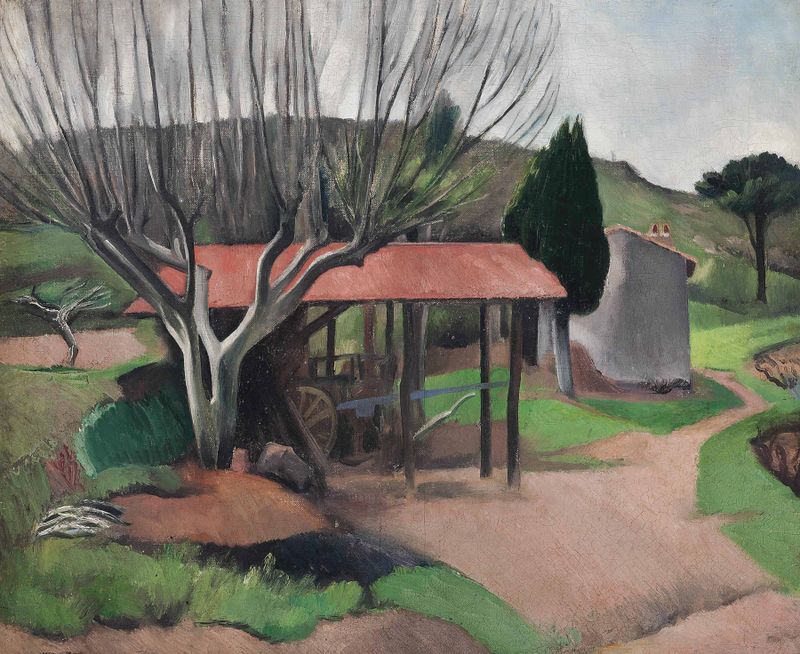
Could a single brushstroke hold eternity? In the tranquil embrace of nature and architecture, balance emerges as a profound theme in this striking work. Focus first on the interplay between the warm hues of the façade and the cool tones of the surrounding foliage. Notice how the light bathes the house from behind, casting gentle shadows that dance across the lawn. The artist captures the essence of the scene through a remarkable layering technique, with soft brushstrokes melding together to create a harmonious blend of colors that evoke serenity.
Each detail, from the textured roof to the intricately rendered trees, draws the eye and invites contemplation. Dig deeper, and you'll discover a tension between permanence and transience. The solidity of the house contrasts with the ephemeral quality of the leaves, symbolizing the delicate balance between man-made structures and the fluidity of nature. Additionally, the subtle yet present movement suggested in the trees hints at change, a fleeting moment captured forever.
This duality prompts the viewer to reflect on the relationship between stability and change in their own life. In 1925, the artist was immersed in the vibrant art scene of London, during a period marked by post-war introspection and a search for identity. Living in Hampstead, he embraced the beauty of his surroundings, as well as the rich artistic dialogues of the time, which informed his approach to capturing both the familiar and the transcendent in his work.
More Artworks by Bernard Meninsky
Browse all →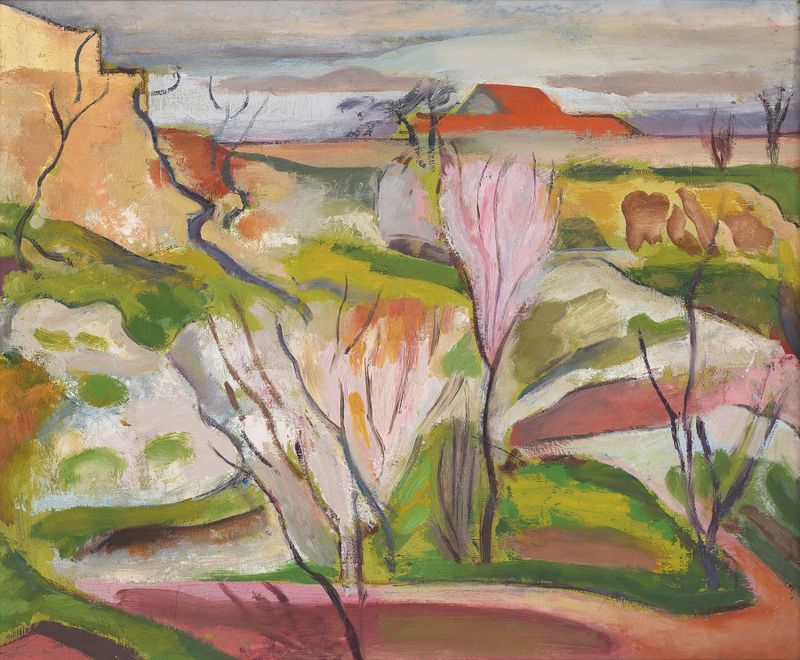
More Architecture Art
Browse all →
The statue of Liberty
Frédéric Auguste Bartholdi

View of Houses in Delft, Known as ‘The Little Street’
Johannes Vermeer

View of Houses in Delft, Known as ‘The Little Street’
Johannes Vermeer

The Cathedral in Rouen. The portal, Grey Weather
Claude Monet

The yellow house
Vincent van Gogh

The Church in Auvers-sur-Oise, View from the Chevet
Vincent van Gogh