From Sevilla in Spain — History & Facts
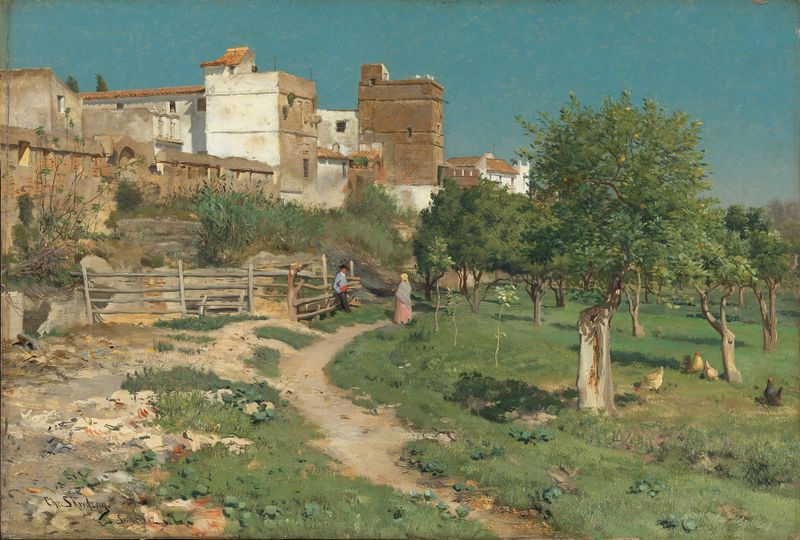
In the quiet sanctuary of the artist's mind, the brush becomes a conduit for faith and memory, capturing moments that defy the passage of time. Focus first on the golden-hued sky that casts a soft glow over the distant hills, beckoning you into the warm embrace of the Spanish landscape. Notice the intricate details of the architecture, a blend of Moorish and Christian influences, where arches stand as silent witnesses to history. The cool blues and earthy tones engage in a delicate dance, illustrating a moment suspended between the sacred and the mundane, each stroke revealing a story yearning to be told. As you delve deeper, the contrast between the light and shadow unveils an emotional tension — the weight of the past in juxtaposition with the present.
The gentle undulation of the hills suggests a sense of tranquility, while the vibrant colors hint at a fervent spirit of life and faith that resonates throughout the canvas. Hidden details, like the fluttering banners in the distance, symbolize hope and a connection to something greater, inviting contemplation of man’s journey through faith. In 1882, the artist created this work during a transformative period in his life, drawing inspiration from the landscapes of Spain. Living in Norway, he was immersed in the Nordic art scene, yet he sought to explore themes beyond his homeland, particularly the spiritual and cultural tapestry of places like Sevilla.
This work reflects both personal introspection and a broader artistic dialogue of the time, as artists began to increasingly engage with the interplay of light, color, and emotional depth.