Winter in Paris — History & Facts
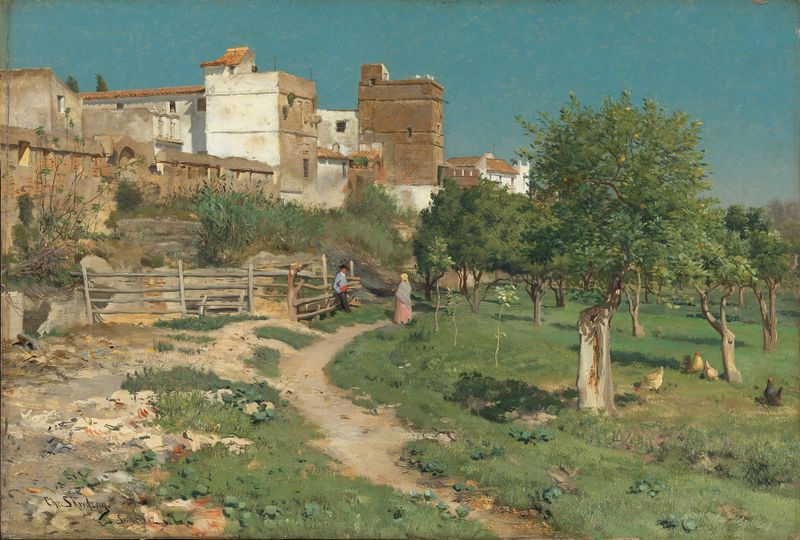
In the stillness of winter, we find ourselves at the intersection of faith and nature, where the frost-kissed city breathes a solemn beauty. Look to the left at the delicate traces of snow that blanket the rooftops, each flake capturing the soft glow of the muted winter sun. Notice how the chilly light spills across the scene, casting long shadows that stretch like fingers in search of warmth. The carefully rendered figures, wrapped in thick layers, huddle against the biting wind, their gestures telling stories of endurance and quiet resilience, as they navigate the streets of this Parisian landscape. Layers of white and blue blend harmoniously, evoking a sense of calm that contrasts sharply with the bustling life below.
The choice of subdued colors mirrors the introspective nature of winter, as if time itself has slowed down. Hidden within the quiet are hints of warmth: the small flickers of light from windowpanes and the gentle movement of a scarf in the breeze remind us of human connection amidst the cold. Christian Skredsvig painted this evocative scene in 1880 while living in France, a time when the art world was experiencing profound shifts with the rise of Impressionism. He was influenced by the urban landscape of Paris, a city alive with artistic fervor, yet he sought to capture the more serene, contemplative aspects of winter.
In this moment, he offered a celebration of faith—both in nature and in the enduring spirit of humanity.