From the beach at Hornbæk — History & Facts
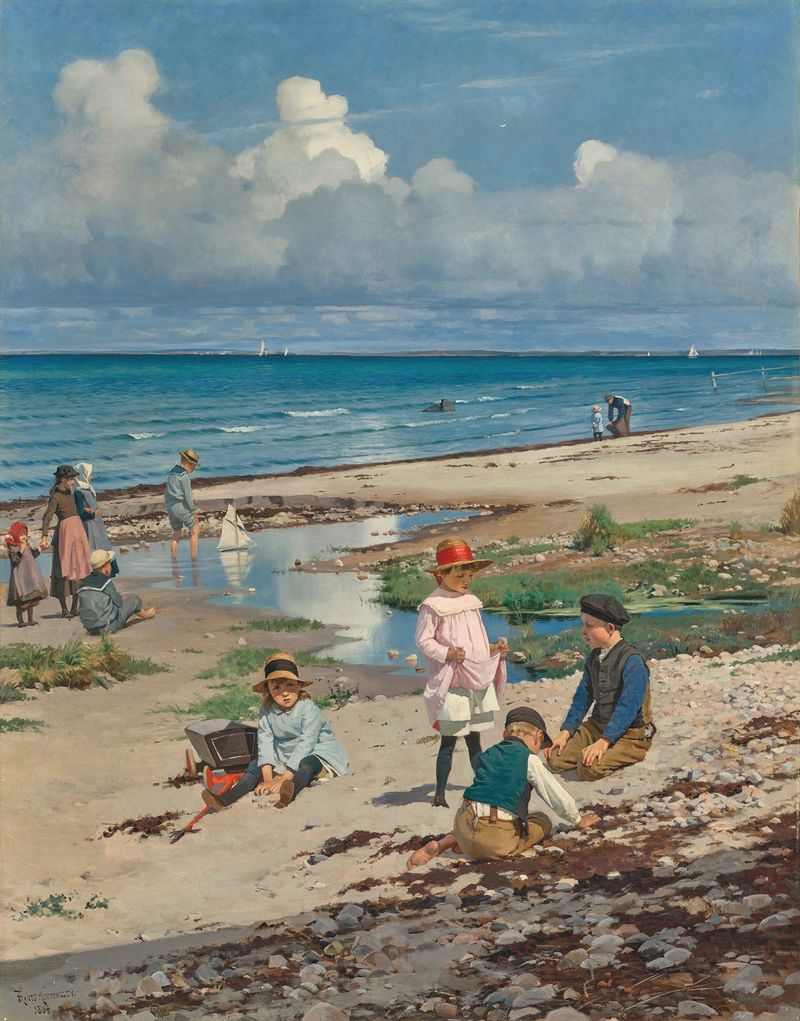
The glistening waters and sun-washed sands of a seemingly idyllic scene can often conceal deeper, more profound emotions beneath their surface. In From the beach at Hornbæk, the interplay of light and shadow evokes a poignant sense of longing, inviting the viewer to delve beyond the tranquil façade. Look to the left at the gentle undulation of waves lapping against the shore, their rhythmic movement contrasting with the stillness of the figures dotting the beach. The palette is a harmonious blend of soft blues and warm golds, reflecting the late afternoon sun and imbuing the landscape with a delicate warmth.
Notice how the brushwork varies: the fine details of the figures are rendered with care, while the background dissolves into softer strokes, suggesting the fleeting nature of the moment captured. Yet this serene depiction of beach life is tinged with an underlying melancholy. The solitary figure gazing out at the horizon hints at introspection, possibly yearning for something unattainable. The juxtaposition of lively beachgoers against the vast, empty sea creates a powerful contrast, suggesting a solitude that surrounds even within the throngs of summer joy.
This tension resonates throughout the composition, transforming beauty into a vessel for deeper emotional currents. Frants Henningsen painted this piece in 1883 during a period marked by the rise of Impressionism, which encouraged artists to explore the effects of light and color. At that time, he was deeply influenced by the coastal landscapes of his native Denmark, where he sought to capture the ethereal qualities of nature. As artists began to move away from the strictures of realism, Henningsen found his voice, blending narrative and emotion in his depictions of everyday life.