From the hills above Dunblane — History & Facts
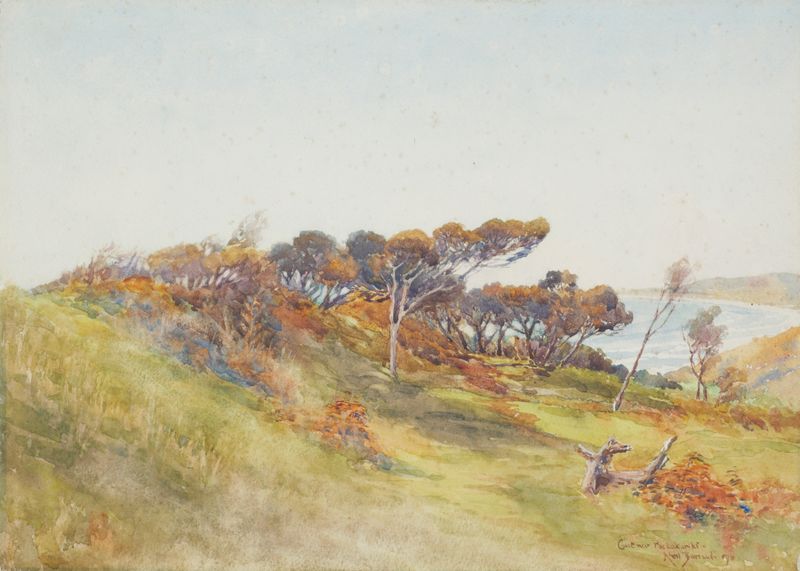
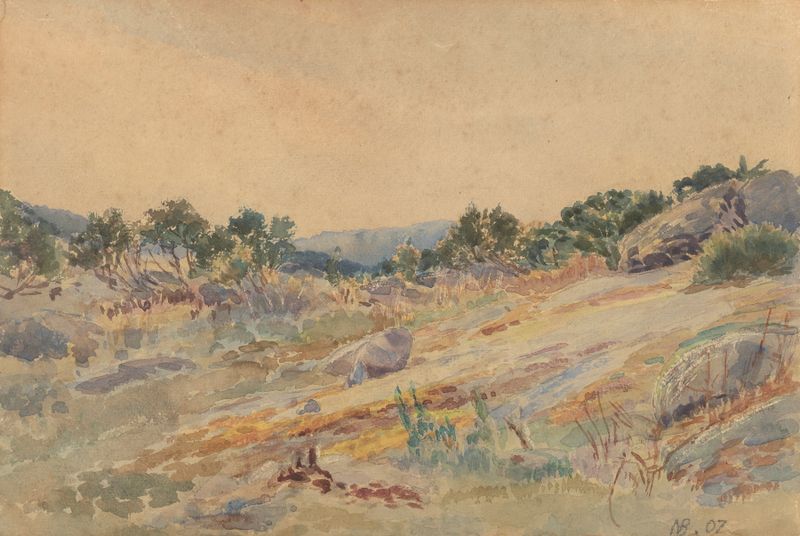
When did color learn to lie? In From the hills above Dunblane, memory and landscape intertwine, revealing both the beauty and the artifice in our recollections. Look to the foreground, where a vibrant patchwork of green fields unfurls, dotted with rustic farmhouses that seem to breathe life into the scene. The soft gradients of blue and gold in the sky dance with one another, creating an ethereal backdrop that beckons the viewer’s gaze to wander. Notice the delicate brushwork that captures the wavering light, giving a sense of movement to the clouds, while the warm tones of the sun-kissed hills evoke a nostalgic warmth, inviting contemplation. Beneath the serene facade lies a tension between reality and idealization.
The idyllic beauty of the landscape may act as a balm for the observer’s heart, yet it simultaneously raises questions of authenticity in memory. The overlapping shades suggest shadows of the past, hinting at both remembrance and forgetting, illustrating how we can paint reality with the hues of our emotions. Each stroke carries not just pigment but also the weight of experience, reflecting the artist's own longing for connection to place and time. In 1883, Edward Barraud painted this work while residing in Scotland, a period marked by a growing fascination with natural beauty in the art world.
This was a time of shifting artistic movements, as artists began to embrace the interplay of light and color, moving away from strict realism. Barraud, influenced by his surroundings, sought to capture the essence of memory woven through the fabric of the landscape, placing his own experiences within the broader narrative of Romanticism and Impressionism emerging across Europe.