Untitled landscape — History & Facts
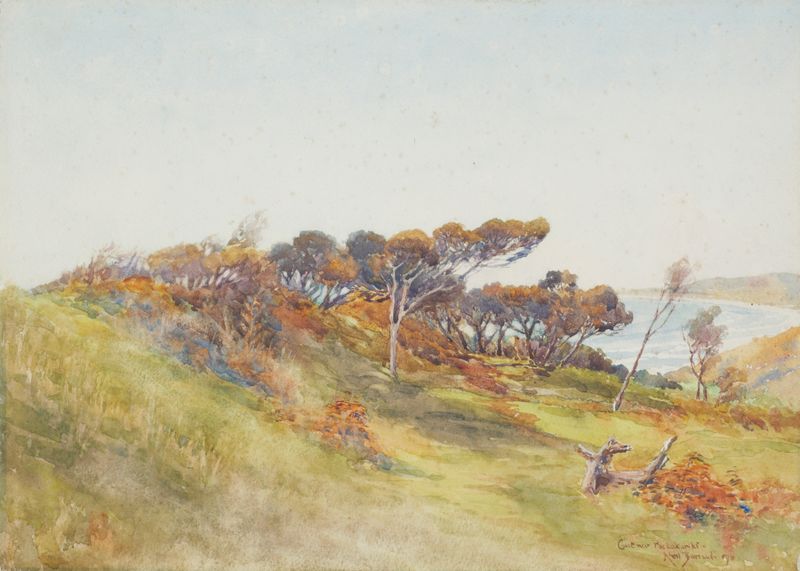
In Untitled Landscape, Edward Barraud captures a tension between serenity and madness, where nature's beauty teeters on the edge of chaos. Look to the horizon, where softly blended pastels melt into one another. The delicate stroke of the brush creates a sense of fluidity, as if the sky and earth are in constant conversation. Notice how warm hues of gold and amber dance in concert with the cooler tones of blue and green, embodying both warmth and underlying unease.
The composition draws the eye towards a solitary figure, perhaps a wanderer or a lost soul, dwarfed by the vastness that envelops them. As you explore the painting, consider the contrast between the idyllic landscape and the isolation of the figure. This juxtaposition evokes a sense of madness lurking just beneath the surface—a reminder that beauty can mask turmoil. The faint wisps of cloud suggest movement, while the stillness of the ground reflects a haunting silence, hinting at the fragility of the mind amidst natural splendor. Barraud created this work in 1907, during a time of significant artistic exploration and personal upheaval in his life.
Emerging from the shadow of the Impressionists, he sought to forge his own path, capturing landscapes that reflected not only the world around him but also the complexities of human emotion. The early 20th century was a period of experimentation, and Barraud's landscapes emerged as a response to the modernity surrounding him, capturing fleeting moments of beauty layered with deeper existential questions.