Garnalenvisser op het strand — History & Facts
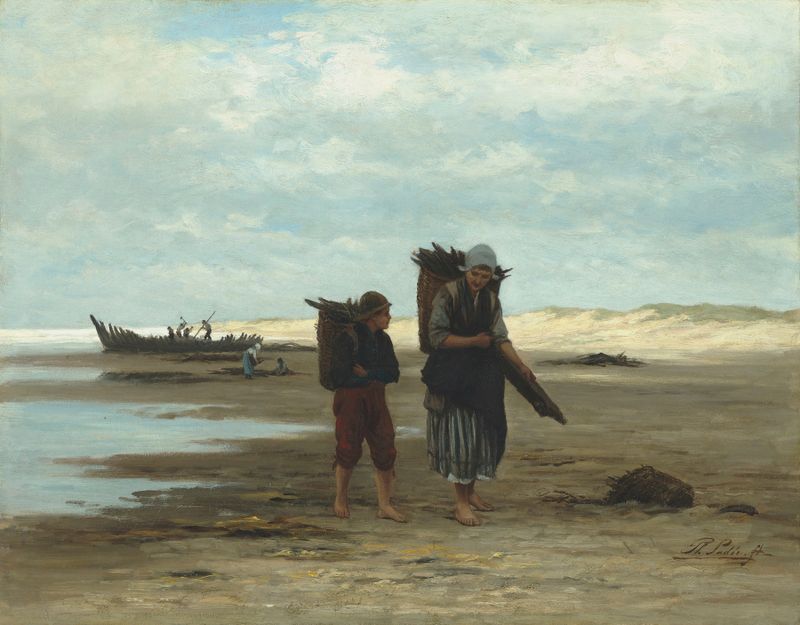
Look closely at the solitary figure depicted on the shore, surrounded by shifting sands and the vastness of the sea. The warm tones of ochre and soft blues wash over the canvas, forming a tranquil yet melancholic backdrop against which the fisherman stands. His hunched posture, a testament to both toil and introspection, invites the viewer’s eye to trace the delicate interplay of shadow and light across his weathered skin, revealing a life marked by relentless labor and introspective solitude. As you absorb the scene, notice the gentle waves lapping at the shore, their rhythmic motion contrasting with the stillness of the figure.
The fisherman’s net hangs loosely by his side, symbolizing both hope and the uncertainty of his catch. The expanse of the beach, with its sparse details, amplifies the sense of isolation, while the distant horizon hints at the boundless world beyond, a reminder of dreams and aspirations just out of reach. Philip Sadée created Garnalenvisser op het strand between 1847 and 1904, a time when he was establishing his reputation within the Dutch art scene. In an era marked by shifting artistic movements, Sadée focused on the realism of everyday life, bringing attention to the struggles and stories of humble individuals.
This painting encapsulates not only the labor of the fisherman but also the broader existential themes of solitude and resilience that permeated the 19th-century art landscape.