Gasthaus in der Vorstadt — History & Facts
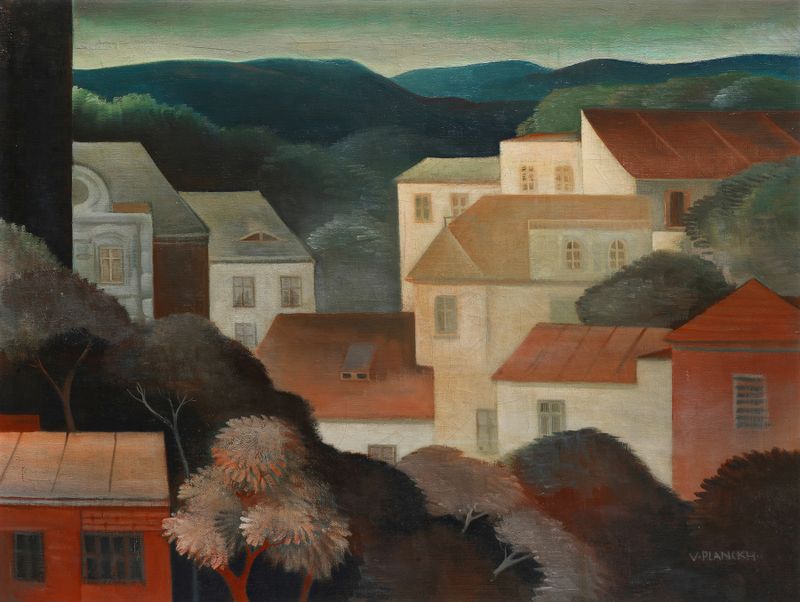
In the quiet stillness of decay, we find the beauty of what remains. This haunting reminder of impermanence lies at the heart of Gasthaus in der Vorstadt, where mere walls whisper stories of forgotten lives. Look to the left at the weathered façade of the inn, its peeling paint a testament to time's relentless passage. The muted palette of ochres and browns envelops the scene, lending a somber mood that draws the viewer in.
Delicate brushstrokes capture the intricate textures of the aged wood and cracked walls, while light filters softly through the trees, coaxing out the subtleties of shadow and highlight. This interplay of light invites contemplation, urging us to see beyond the surface of decay. In this artwork, a sense of nostalgia permeates every corner, as the juxtaposition of life and abandonment unfolds. The inn stands as a relic of community, now silent yet echoing with laughter and warmth from a vibrant past.
The overgrown vegetation encroaching upon the structure hints at nature’s reclamation, a reminder of life’s cyclical nature and the bittersweet beauty found in decay. Each detail, from the rusted sign to the cracked window, speaks of stories untold and dreams faded, prompting deeper reflection on what has been lost. Viktor Planckh painted Gasthaus in der Vorstadt in 1927 during a period marked by significant social and political change in Germany. As the country grappled with the aftermath of World War I and the dawning of the Weimar Republic, artists like him sought to convey the complex emotions of this era.
In the quietude of his work, he captured the essence of a world in transition, one that was both yearning for renewal and haunted by the remnants of its past.