Gastmaal van Ester — History & Facts
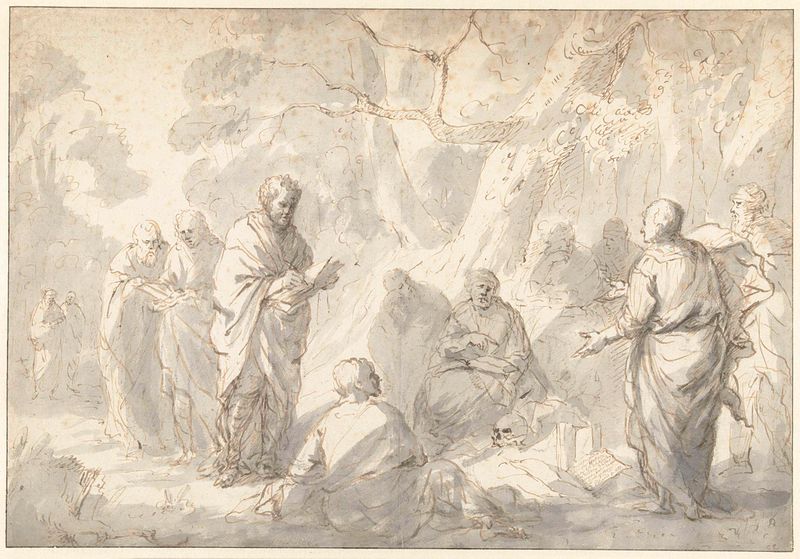
When did color learn to lie? The hues of ecstasy dance between truth and illusion, inviting the viewer into an intricate ballet of light and shadow. Focus on the sumptuous spread at the center, where rich reds and vibrant golds mingle with the deep greens of the surrounding foliage. The opulence of the table setting beckons the eye, drawing attention to the lavish fruits and delicately arranged dishes that promise indulgence. Notice how the artist skillfully employs chiaroscuro, creating a striking contrast between the illuminated elements and those shrouded in shadow, heightening the tension of the feast. Amidst the abundance lies a subtle undercurrent of discomfort.
The gestures of the figures, their expressions caught in a moment of deliberation, suggest an inner conflict that belies the surface celebration. Consider the interplay between the ornate setting and the somber faces; here, ecstasy is tinged with a sense of foreboding, as if each character grapples with their own desires and the weight of expectation. The colors, while vibrant, carry an enigmatic quality that compels the observer to question the true nature of this gathering. In 1666, Zacharias Blijhooft painted this work amidst the rich tapestry of Dutch still-life tradition, a genre flourishing during this period.
Living in the Netherlands, he engaged with the burgeoning art market that celebrated both opulence and moral reflections. This era, marked by both affluence and a growing sense of introspection, informed his approach, blending realism with allegorical undertones, ultimately embedding a deeper narrative within the sumptuous feast.