
Gebirgige Seelandschaft — History & Facts
In the stillness of a highland landscape, the heart aches with the pull of yearning. Each brushstroke whispers the desire for connection, both with nature and with the self. Look to the left where the undulating hills rise gently against a vast sky, their rich greens and deep blues mingling in a dance of tranquility. Notice how the sunlight bathes the peaks, casting a warm golden hue that contrasts beautifully with the cool shadows in the valleys below.
The horizon stretches endlessly, inviting the eye to wander through layers of color and texture. Jettel's mastery lies in his ability to evoke a sense of space and depth, drawing the viewer into an immersive dialogue with the landscape. Yet amid this serene beauty, a tension lingers. The striking contrast between the verdant hills and the brooding clouds above hints at a deeper emotional undercurrent — perhaps a longing for peace amidst the chaos of existence.
Small details, such as a solitary tree perched defiantly on a rocky outcrop, suggest resilience against the forces of nature, mirroring our own desires to endure and thrive. This profound interplay between light and shadow encapsulates an internal struggle, where hope and melancholy coexist. During the late 19th century, Jettel painted this work at a time when the European art scene was shifting towards impressionism. He found himself in the picturesque landscapes of his native Austria, amidst the growing appreciation for plein air painting.
This period of artistic exploration allowed him to express his longing for nature’s beauty and the harmony found within it, reflecting both personal and collective desires during a time of transformation.
More Artworks by Eugen Jettel
Browse all →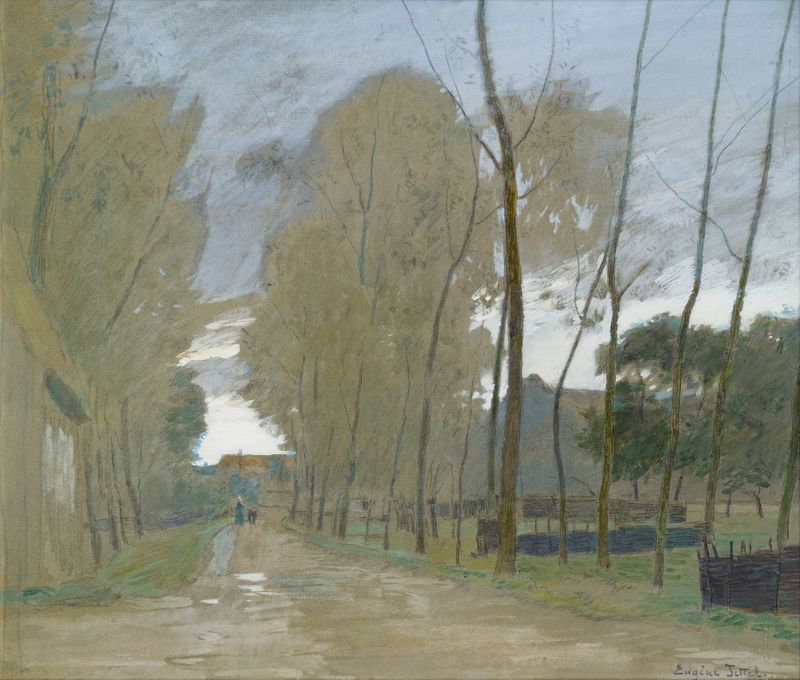
Motiv aus der Bretagne
Eugen Jettel
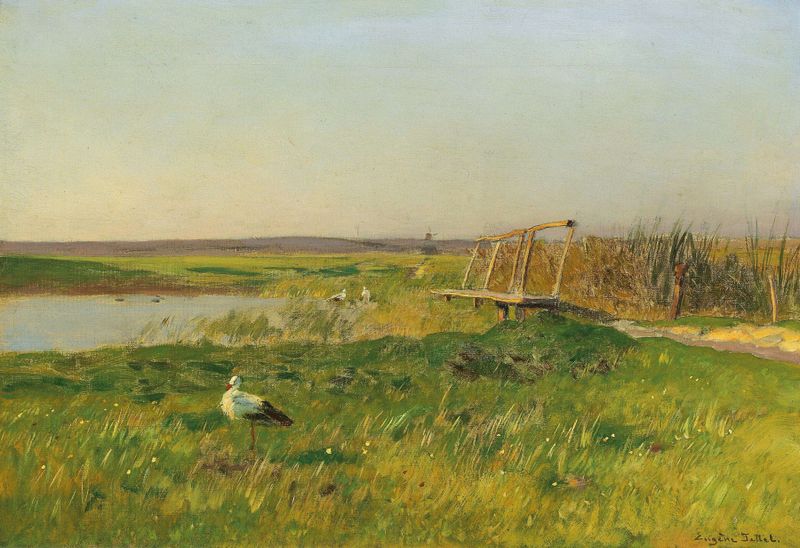
Frühlingslandschaft mit Störchen an einem Weiher
Eugen Jettel

Rinder auf Sommerwiese
Eugen Jettel
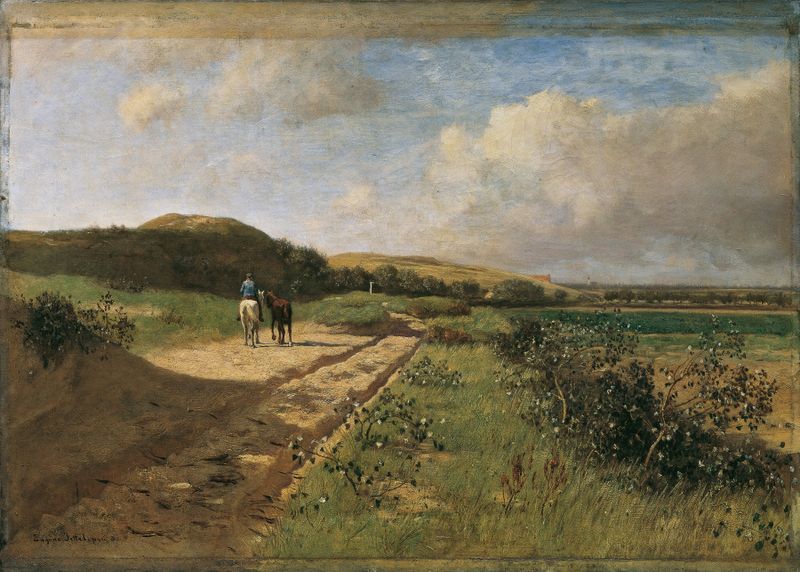
Dünen bei Katwijk
Eugen Jettel
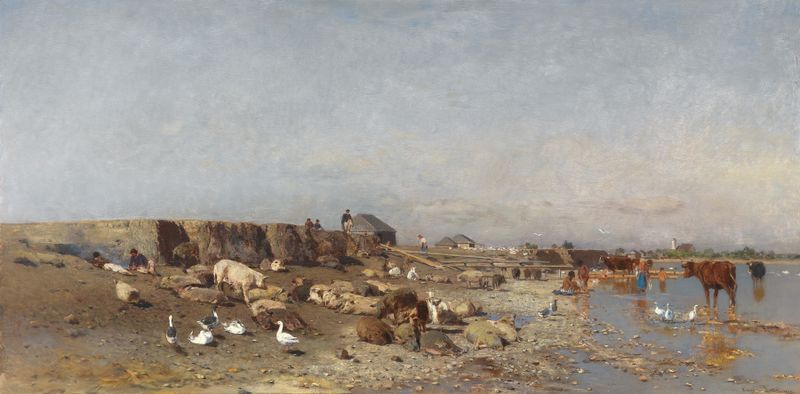
Motiv aus Szered an der Waag
Eugen Jettel
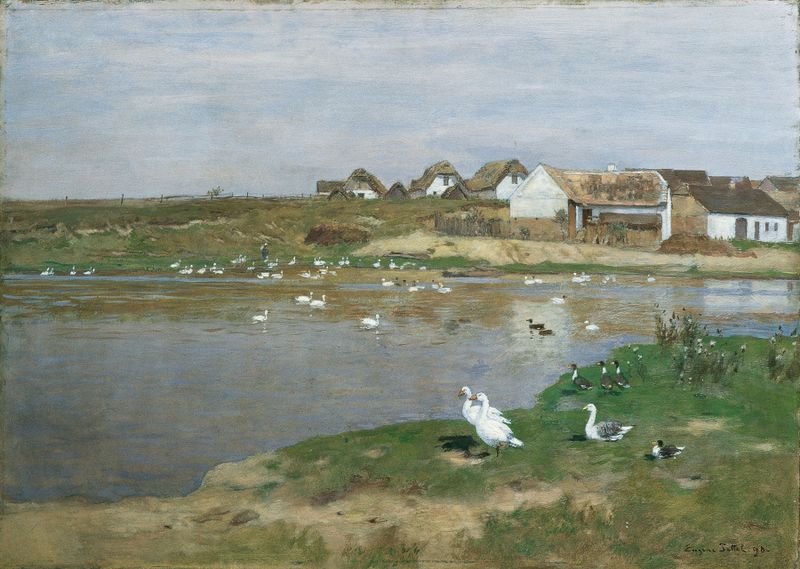
Der Gänseteich in Kotting-Neusiedl
Eugen Jettel

Flusslandschaft Mit Boot
Eugen Jettel

Flusslandschaft mit Kühen
Eugen Jettel

Dorfpartie Strohhütten aus Staatz
Eugen Jettel

Abendlandschaft
Eugen Jettel





