Gebirgslandschaft — History & Facts
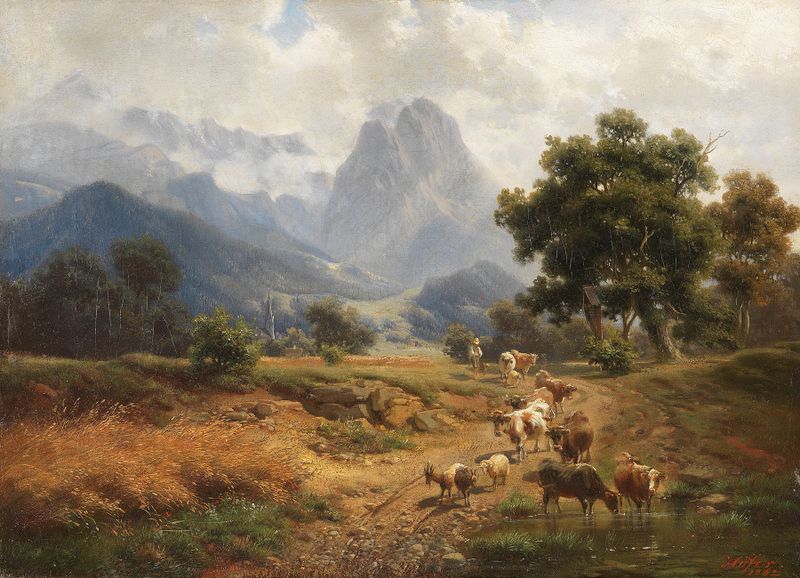
Could beauty survive in a century of chaos? In Gebirgslandschaft, the tumult of the natural world stands as a testament to resilience amid disorder. Look to the left at the rugged peaks that rise dramatically against a turbulent sky. Notice how the deep greens and browns of the mountains contrast with the light, swirling clouds, a vibrant chaos captured in oil. The brushwork is decisive yet fluid, suggesting both the power and fragility of the landscape, as if it could either collapse under its own weight or endure.
The composition draws your eye upward, inviting you to ponder what lies beyond the jagged horizon. The interplay of light and shadow evokes a sense of foreboding, reflecting a deeper emotional tension. The mountains, imposing yet beautiful, may symbolize the struggle between stability and madness, while the clouds hint at impending storms, both literal and metaphorical. Each stroke reveals a duality—nature's sublime beauty intertwined with the chaos of existence, a reminder of the turmoil that often accompanies such breathtaking vistas. During the time Gebirgslandschaft was created, Heinrich Höfer was exploring the complexities of landscape painting, likely influenced by the changing socio-political landscape of his era.
Although the exact date remains undetermined, it reflects a period when artists sought to capture the tumultuous spirit of their surroundings, responding to the anxieties of a world on the brink of modernity.