Gebirgslandschaft mit See — History & Facts
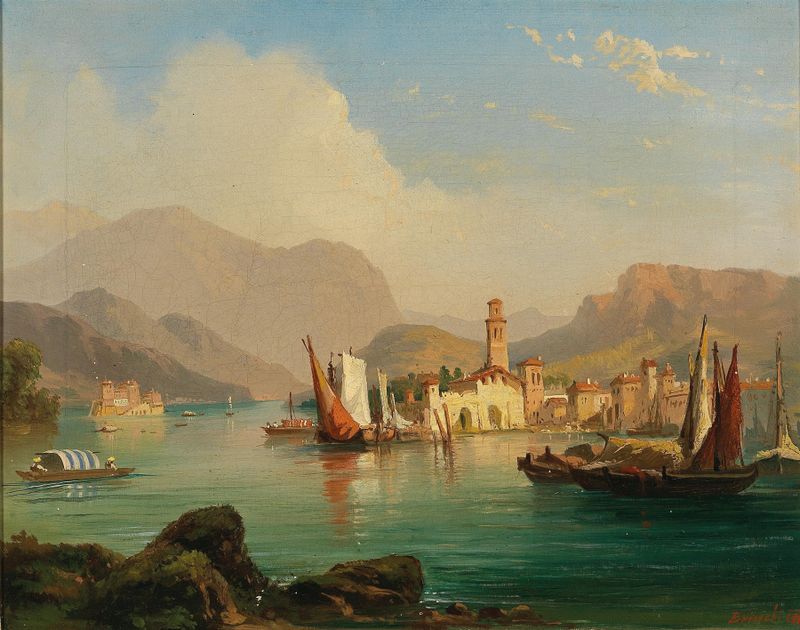
Is this a mirror — or a memory? The grandeur of the mountains, kissed by the reflected sky, invites viewers to pause and ponder the boundaries between reality and imagination. Look to the undulating hills at the left, where deep greens mingle with earthy browns, effortlessly guiding your gaze upward to the majestic peaks. As your eyes trace the contours, notice how the light dances across the water's surface, creating a shimmering path that draws you deeper into the landscape's embrace. The delicate brushwork captures the stillness of the scene, while the interplay of light and shadow imbues the mountains with a sense of timelessness and serenity. Beneath the calm surface, however, lies a tension between nature’s grandeur and the fragility of memory.
The tranquil lake mirrors not just the mountains, but also a sense of nostalgia that beckons the viewer to reflect on their own experiences within such landscapes. The contrast between the solid earth and the ephemeral water suggests a fleeting moment, a reminder that while nature remains steadfast, our memories of it are often transient and elusive. In 1857, Carlo Brioschi created this captivating work during a period marked by Romanticism's exploration of nature. Living in Europe, where landscapes became a favorite subject for countless artists, he sought to capture the essence of the sublime.
Brioschi's paintings reflect not just the beauty around him but also the emotional resonance those landscapes held amidst the rapidly changing world of the 19th century.