Felsküste und Segelboote — History & Facts
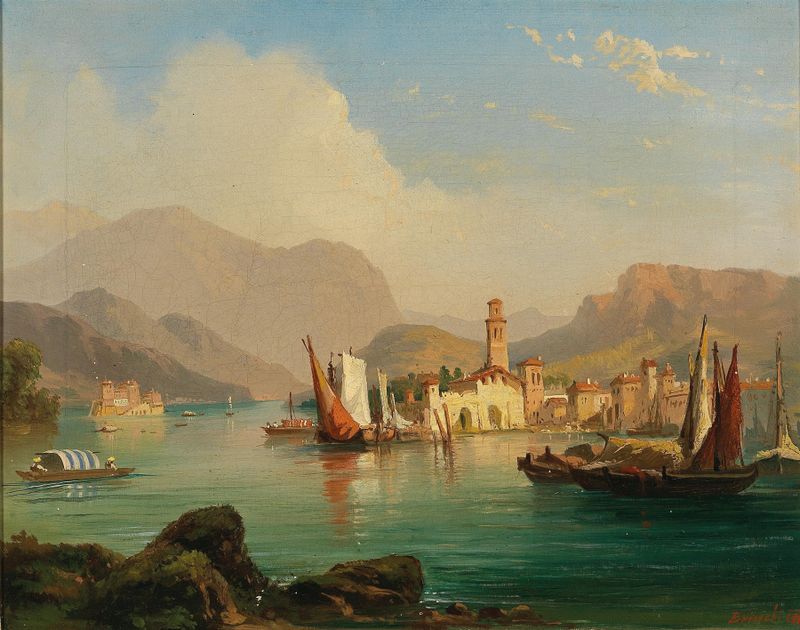
In the quiet moments of decay, beauty often finds its voice. Look closely at the horizon where the sea kisses the sky; the subtle interplay of blues and greys invites your eyes to wander. Notice how the weathered sailboats drift lightly upon the water, their white sails billowing like ghostly reminders of past voyages. The artist’s brushstrokes evoke a sense of tranquility, yet there lingers an undercurrent of melancholy, as the shoreline meets the boats in a dance of fading glory. Beneath the serene surface, a tension brews between the vibrant life of the boats and the encroaching signs of nature’s reclamation.
Observe the decay in the rocks; the crumbling textures serve as a testament to the passage of time, framing the fleeting beauty of the moment. Here, amidst the gentle waves, lies a poignant contrast—the ephemeral nature of human endeavor against the relentless forces of nature, suggesting that even in decline, there exists a profound elegance. In 1853, while capturing this scene, Brioschi was in a period of artistic blossoming in his native Italy. The world was witnessing a shift towards realism, and the artist sought to embrace this movement, capturing everyday landscapes with emotional resonance.
As he painted, Europe was enveloped in industrial transformation, reflecting both progress and the inevitable decay that follows in its wake, a duality that is beautifully encapsulated in this work.