Gefecht an einer südlichen Meeresküste — History & Facts
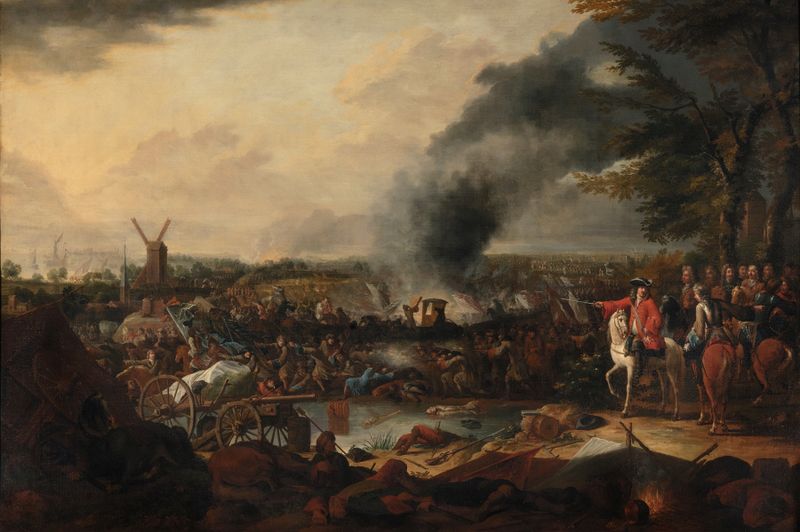
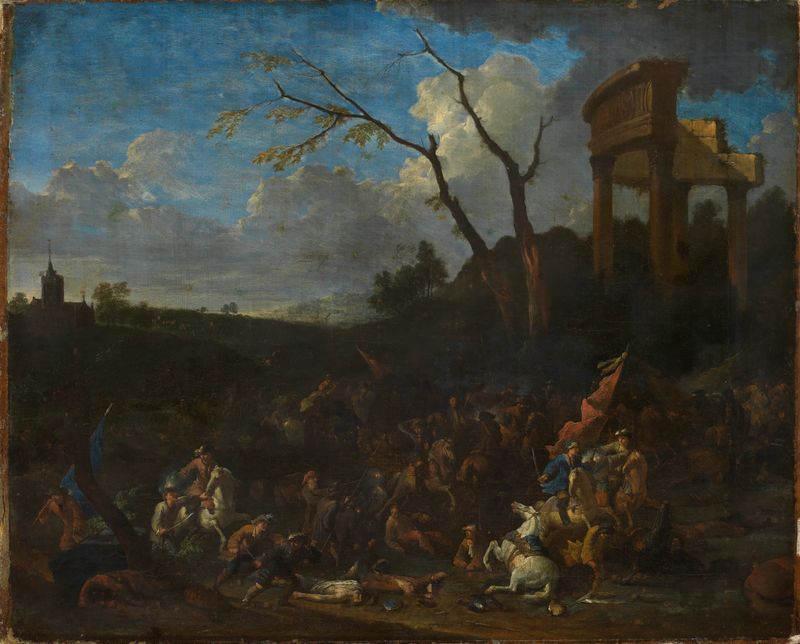
In the quietude of creation, artists weave legacies that whisper through time, resonating with deep emotional truths and silent histories. Focus on the tumultuous waves crashing against the rocky shore in Gefecht an einer südlichen Meeresküste, where the stormy sea mirrors the chaos of battle depicted in the foreground. The artist's brushstrokes render the water in a swirling dance of blues and greens, pulling the viewer's gaze toward the strife unfolding on land. The contrast of the vibrant colors against the muted browns of the soldiers and their vessels emphasizes the tension between nature and humanity, showcasing a moment suspended between conflict and serenity. As you delve deeper, notice the figures caught in action; their gestures speak of bravery and desperation.
The divide between the calm sea and the fiery conflict highlights the fragility of life amidst chaos. The distant horizon, shrouded in mist, suggests an uncertain future, while the dynamic composition evokes a sense of urgency, compelling us to consider the legacy of those who fought and fell. This interplay of light and shadow not only illustrates the physical battle but also symbolizes the moral dilemmas faced in warfare. In 1708, Jasper Broers painted this piece during a time when the Netherlands and other European nations were embroiled in various conflicts, shaping both national identity and artistic expression.
As he navigated his career, Broers sought to capture the essence of humanity’s struggles amid the backdrop of nature's indifference, forging a connection that would resonate with viewers long after the dust of battle had settled.